Reduce Background Traffic
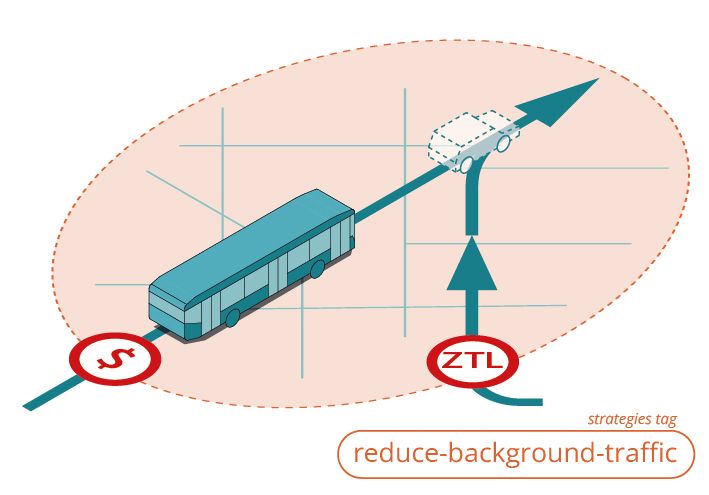
Since the 1960s, cities have deployed strategies to reduce background traffic to improve transit performance in high-traffic areas, such as downtowns and historic centers, where it’s difficult or impossible to provide transit with dedicated lanes and diverting through traffic is not viable due to a lack of alternatives, or where traffic is so heavy that the effectiveness of other transit priority strategies is reduced. Background traffic reduction can be achieved through the deployment of two main types of tools: access regulations and pricing.These schemes to reduce traffic have generally been implemented with broader goals than just prioritizing surface transit, including environmental quality, pollution reduction, and overall quality of life.
Access regulations are relatively common in continental Europe, particularly in Italy, where the ZTL (Zona a Traffico Limitato, limited traffic area) model has been experimented with since the late 1960s and has been enshrined in legislation since 1992, providing municipalities of different size with an extremely flexible tool to address congestion in areas of various sizes by restricting access to selected categories of users during parts of the day or 24/7.
Congestion or Road pricing schemes have attracted the attention of researchers and policymakers, but remain relatively rare and generally preferred in large metropolises such as New York, Stockholm, and London. Studies have shown that reducing background traffic in congested areas through measures such as road pricing and limited-access areas can improve surface transit speed and reliability.