Strategies for Transit Priority
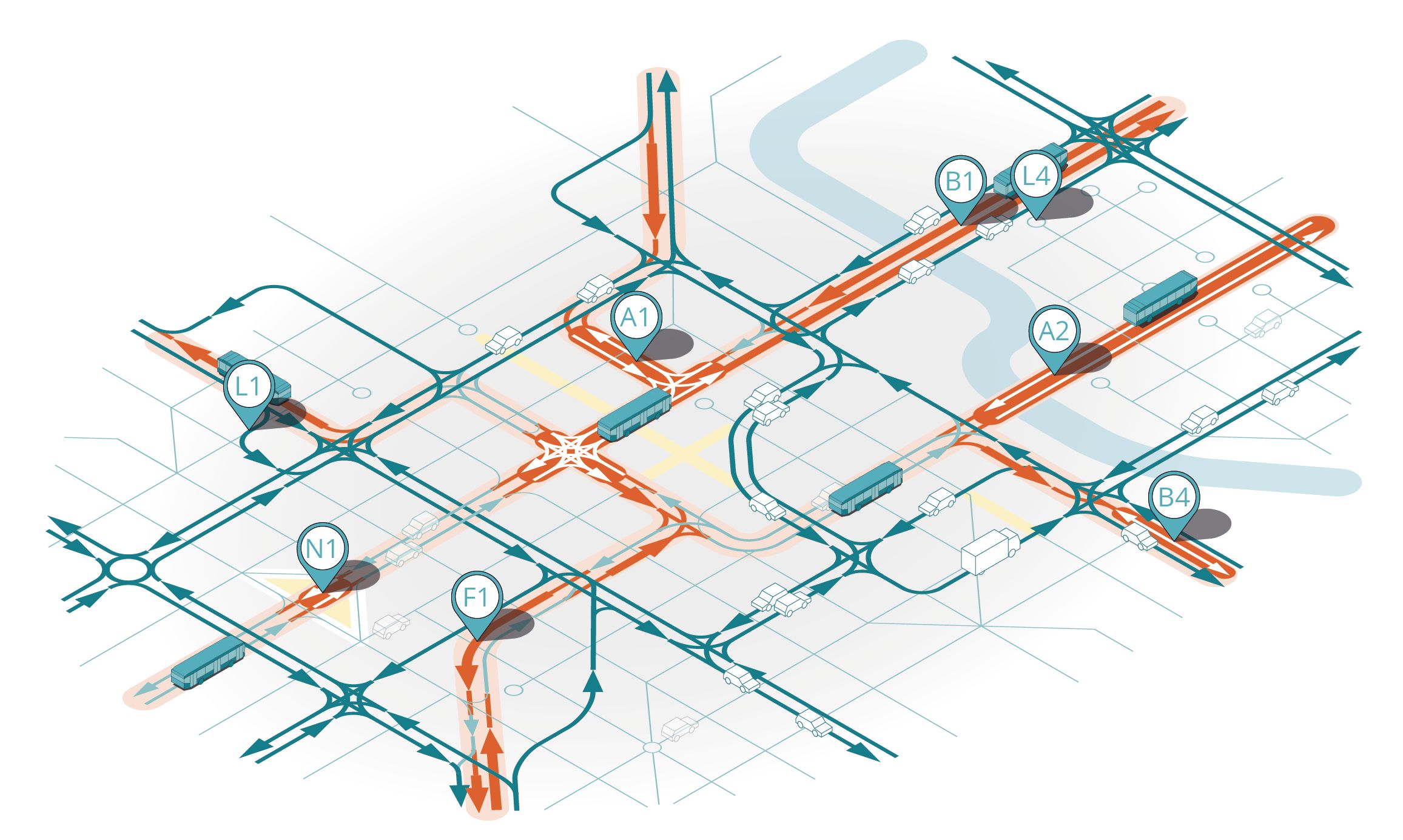
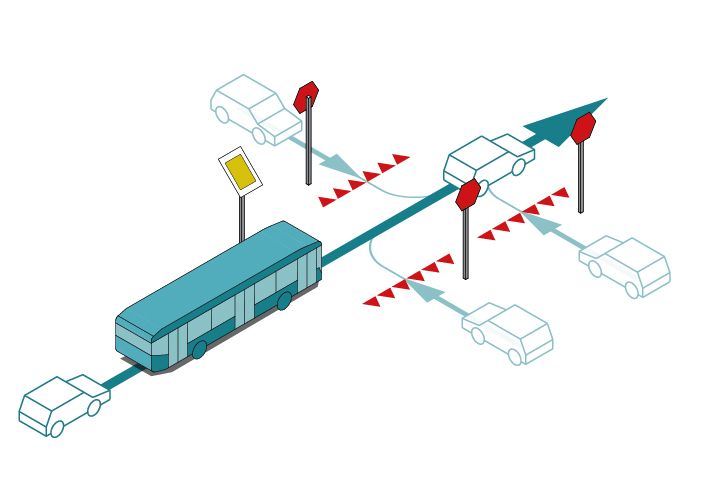
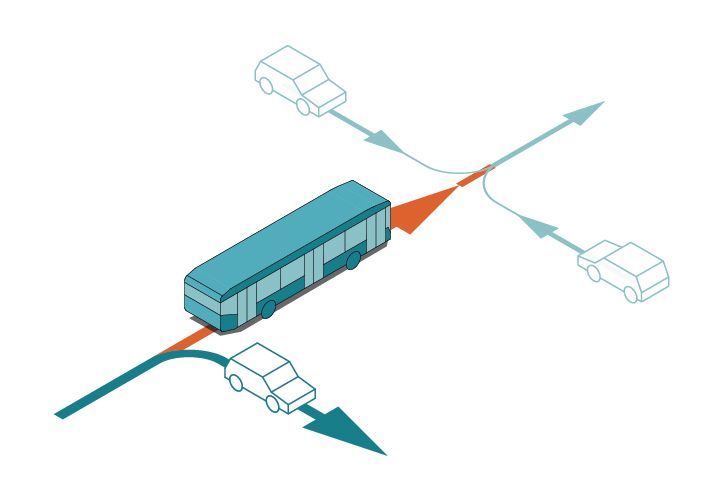
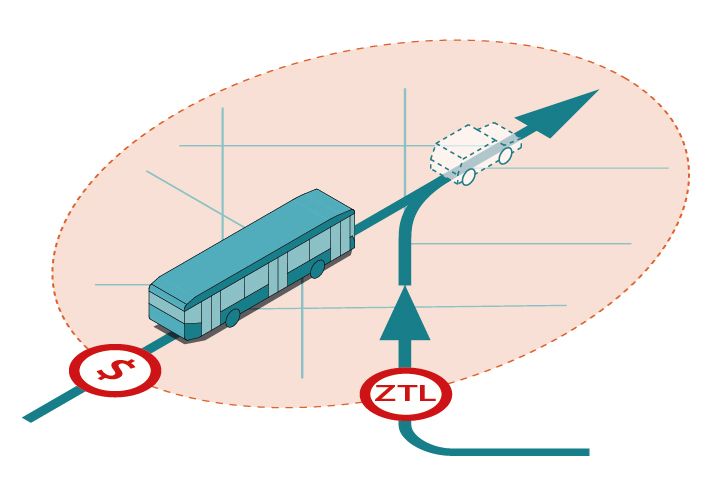
Surface transit is embedded in traffic, which is why it's slow and unreliable. Transit priority tools can be used individually, along a corridor or at a node. But even more effectively, they can be combined into broader traffic management strategies that prioritize transit by addressing the many causes of delay in a systemic way, by defining a hierarchical grid of streets to reduce intersection delays, by diverting through traffic away from transit routes, and by curbing overall traffic levels in congested areas. Successful transit priority policies leverage some or all of these broader strategies to create comprehensive traffic management plans that, in a proactive manner, shape how private cars, trucks, transit, and other modes navigate the city.
Transit-priority strategies operate at different scales. They may be deployed in a targeted manner to address specific sources of delay, such as a complex traffic junction, or a few congested blocks with intense curb activity, or to create a shortcut for transit. Alternatively, they can be implemented more systematically at the neighborhood level—for example, by removing through-traffic from a major transit thoroughfare or by consistently deprioritizing side streets to simplify intersection management or eliminate traffic signals, thereby creating a Transit Priority Corridor.
Systematic approaches require treating transit priority as part of a proactive traffic-management strategy through some form of circulation planning, rather than addressing issues solely at the corridor level. These strategies can also support related planning objectives, including traffic calming and improved road safety.
Targeted Strategies
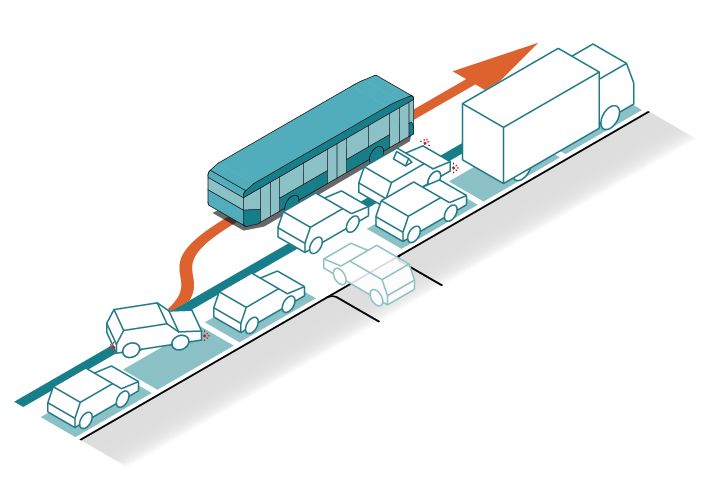
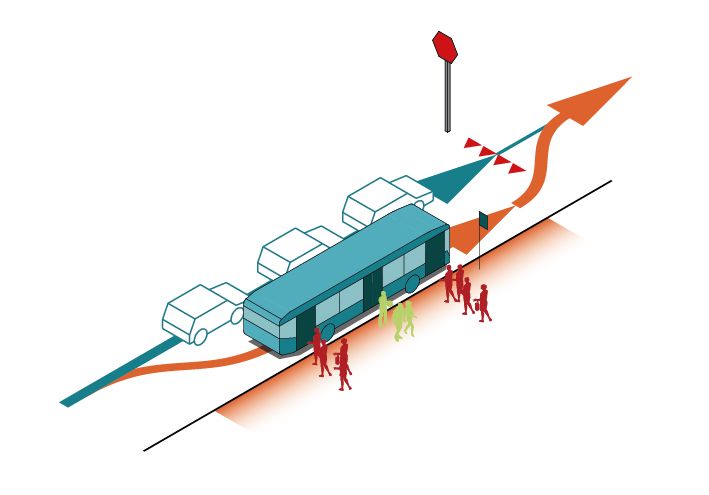
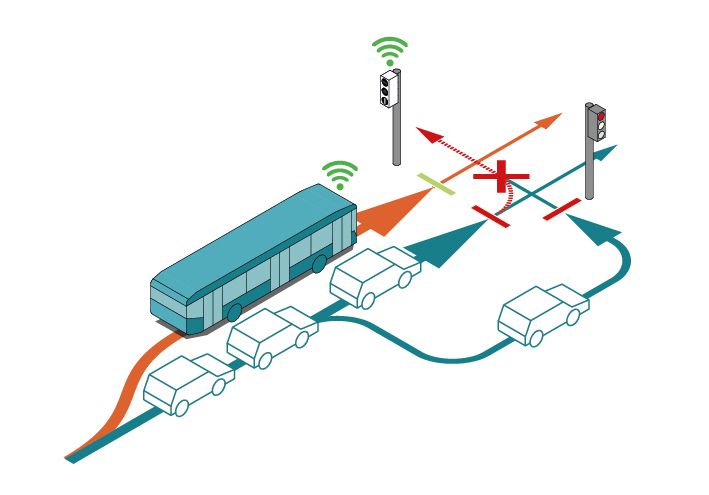
Actions that address transit delays in a specific location.
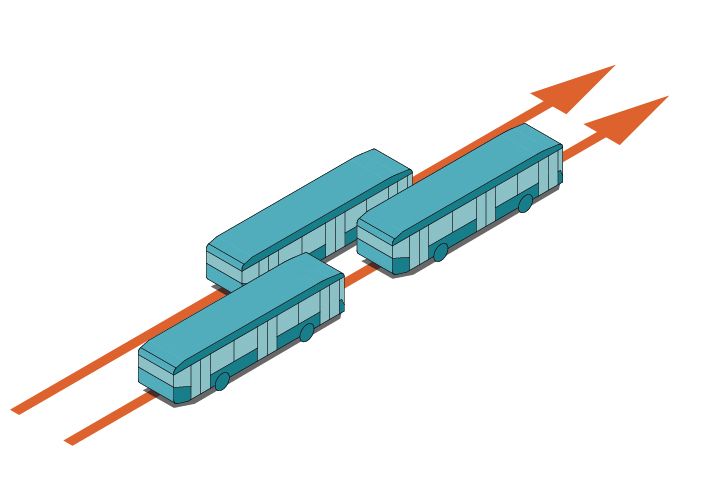
Systematic Strategies
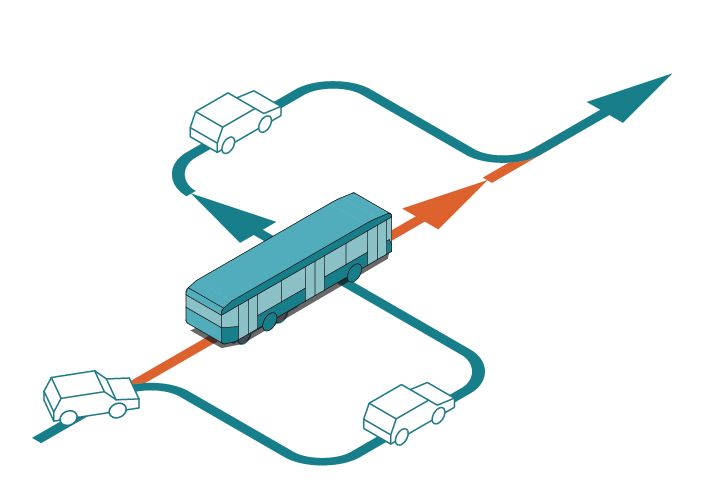
Coordinated measures that address transit priority at a system-wide scale as part of an area-wide traffic-management strategy.