Tools for Transit Priority
Transit Priority can be achieved through a wide variety of physical and non-physical measures, such as dedicated transit lanes spanning entire corridors or just a few critical blocks, localized measures such as queue-jumps and modal filters, or area-wide measures to curb background traffic, such as Limited Traffic Areas and Congestion Pricing. Transit-dedicated lanes can be placed in different positions within the roadway, with associated benefits and limitations regarding conflict management, encroachment risks, deployment costs, and urban design. Effective transit priority can result not only from the intrinsic characteristics of a transit lane type, for example, the relative position from the conflict-prone curb space, but also from how they interact with the broader urban environment and traffic flows as part of a broader strategy to foster transit priority
How to navigate the toolbox
The transit priority tools are grouped into three main categories. Each category is subdivided into classes, and each class may be further organized into a few sub-typologies. The terminology is partially based on NACTO’s classification, as illustrated in the “Transit Street Design Guide,” and has been further refined and expanded to better account for international practices. For each typology, the toolbox provides a brief overview of its main characteristics, history, and key facts.
Linear Continuous Measures (dedicated lanes)
This category encompasses the most continuous transit-priority physical arrangements, namely dedicated transit lanes. The organization into seven main classes is based on two major factors: i) the relative position of the dedicated transit lane with respect to the curb and the other components of the right-of-way (general traffic lanes, parking, etc.); ii) the likely presence of curbside activity, making a distinction between limited-access roadways, such as highways with no sidewalks or property access, and urban streets with mixed traffic, curbside activity and vehicular property access. Each main class clusters similar typologies based on the dedicated lane's relative position within the roadway. The sub-typologies are based on the urban context and specific applications.
A - Transit-Priority Streets
The entire street is primarily dedicated to transit vehicles.
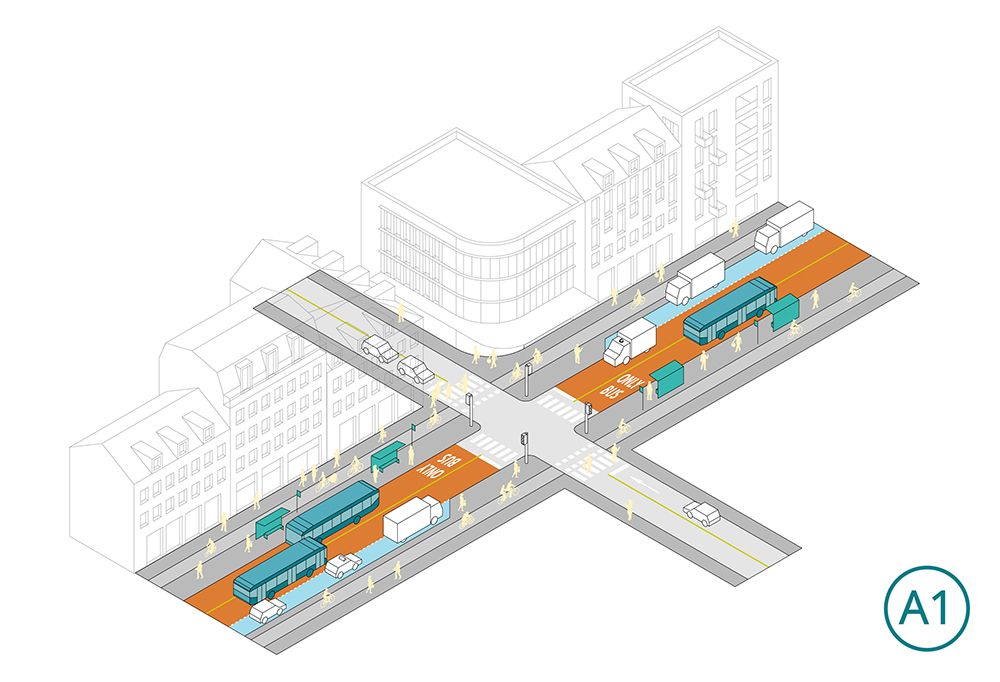
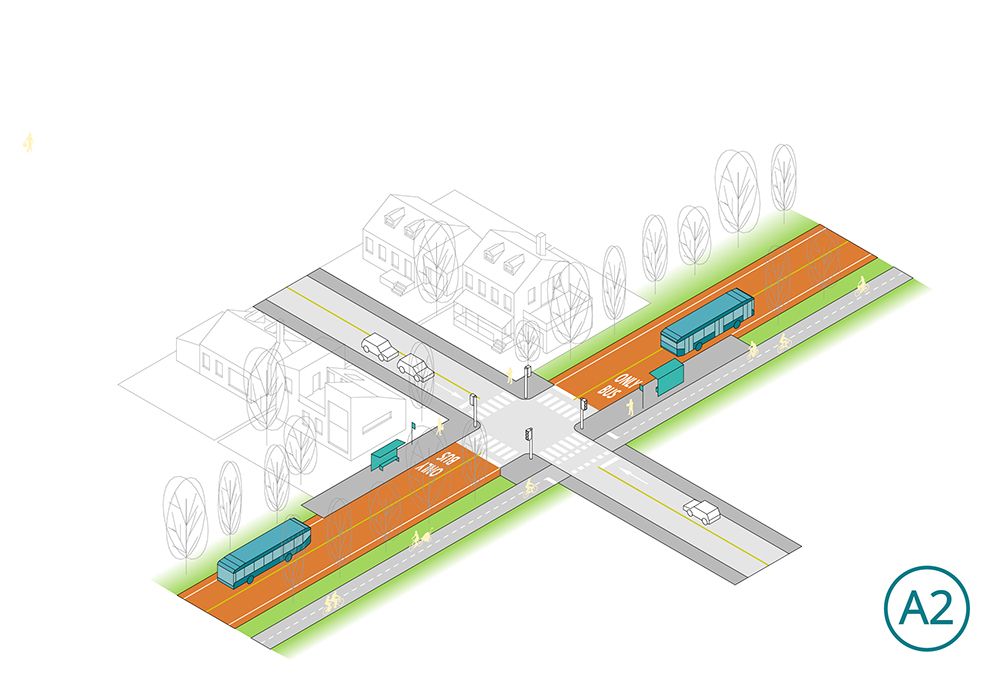
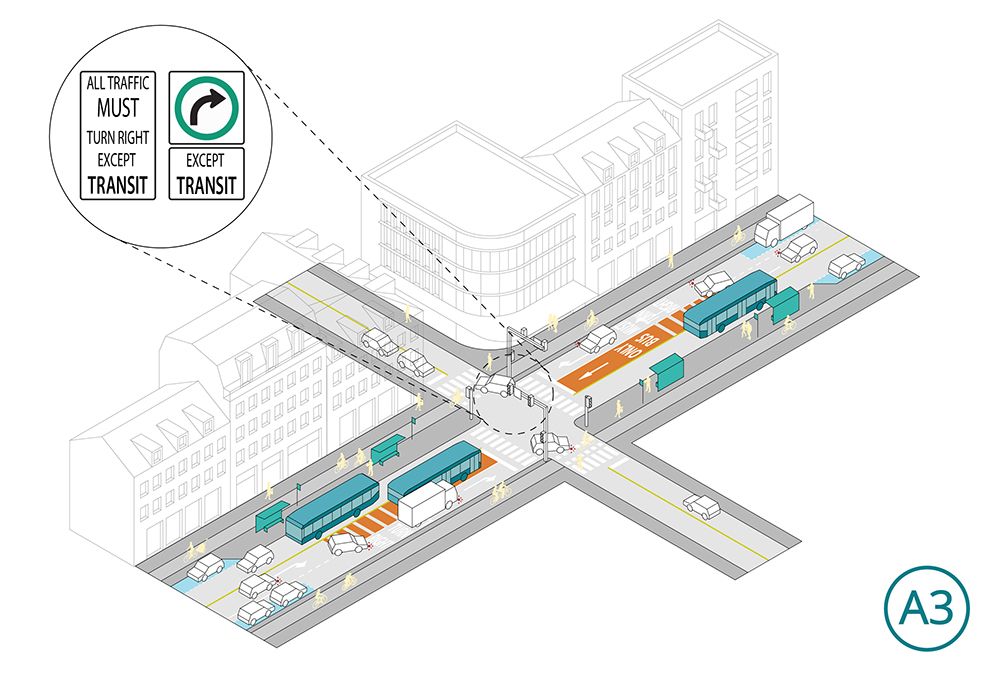
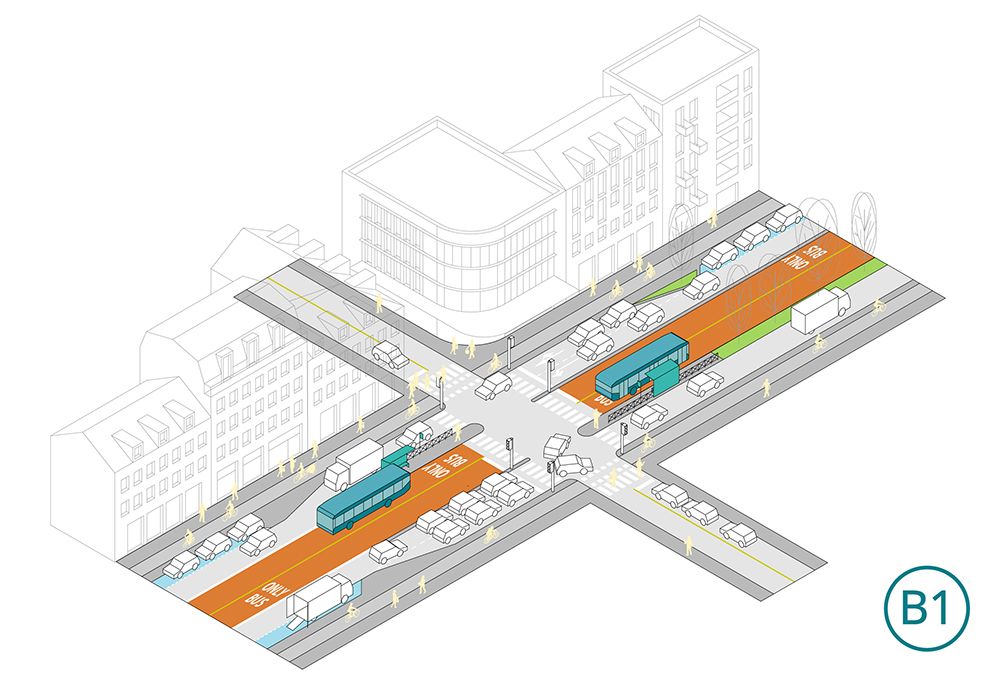
B - Center-Running Transit Lanes
The transit-dedicated lanes are located at the center of the roadway.
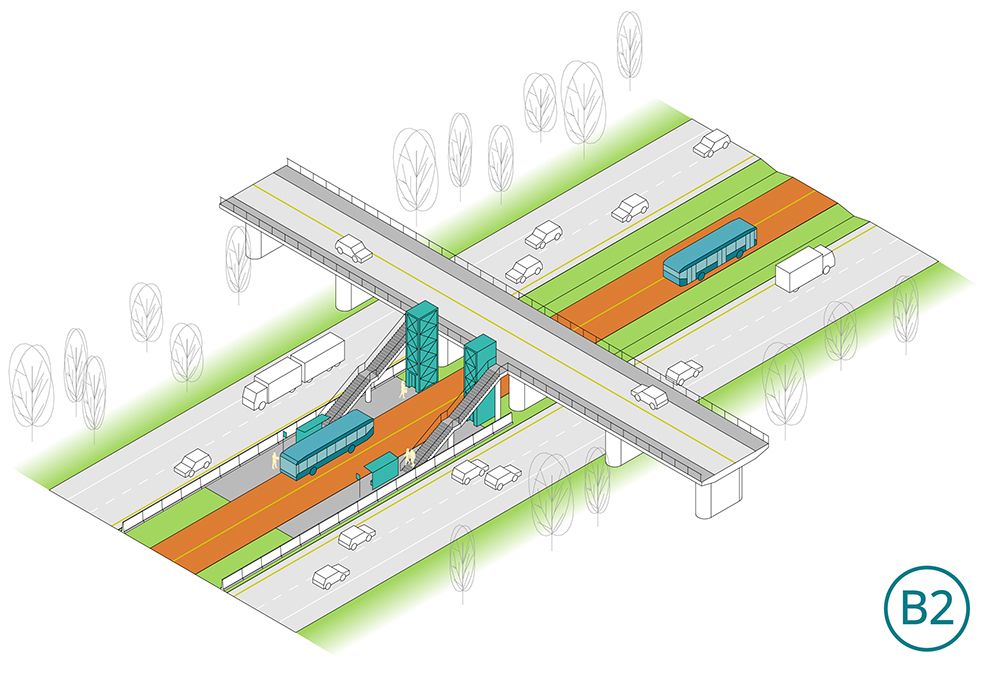
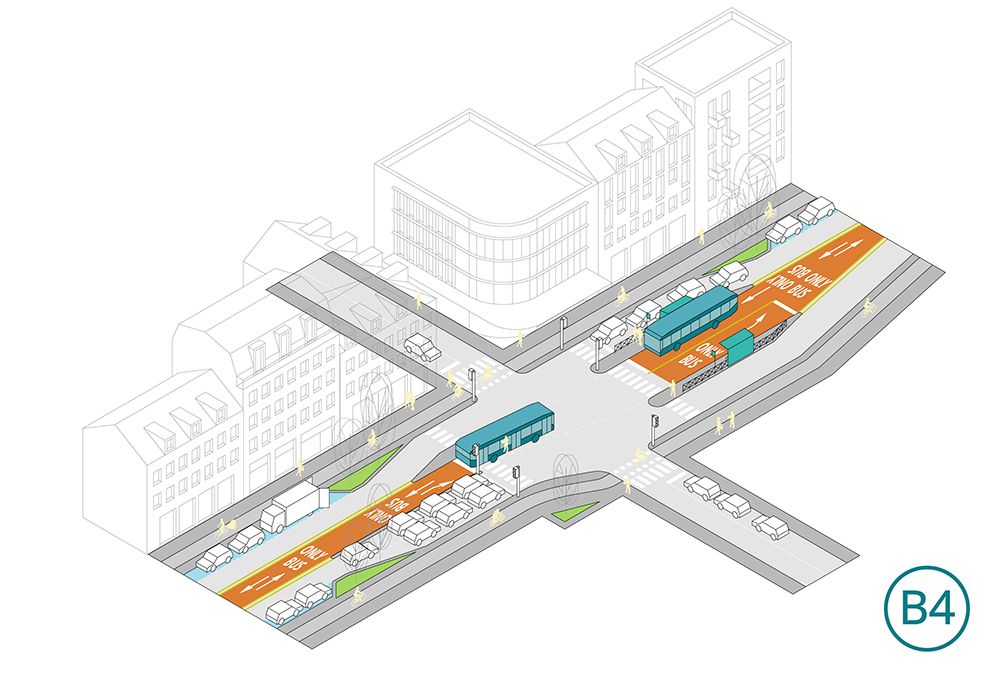
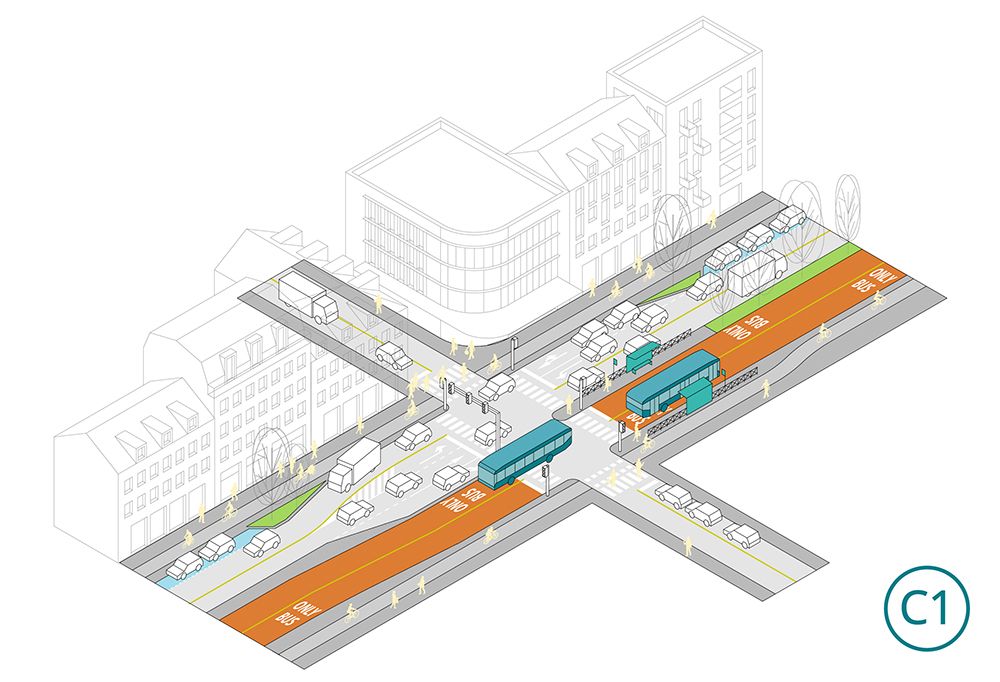
C - Edge-Running Bidirectional Transit Lanes
The transit-dedicated lanes in both directions are located on one side of the roadway.
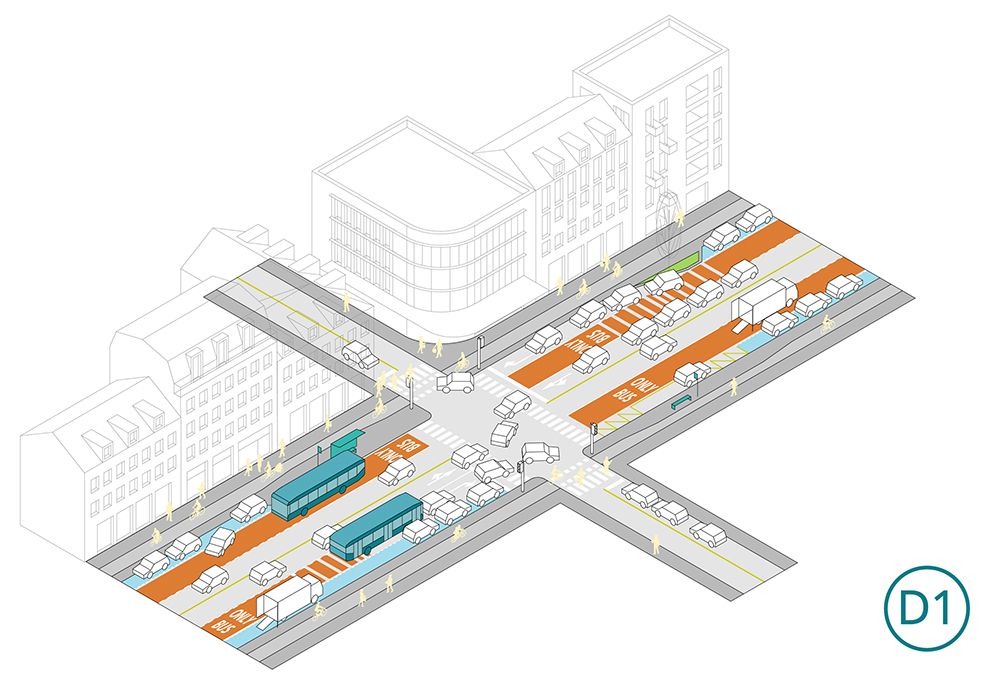
D - Offset Transit Lanes (Parking-Adjacent)
The transit-dedicated lanes are located alongside curbside parking.
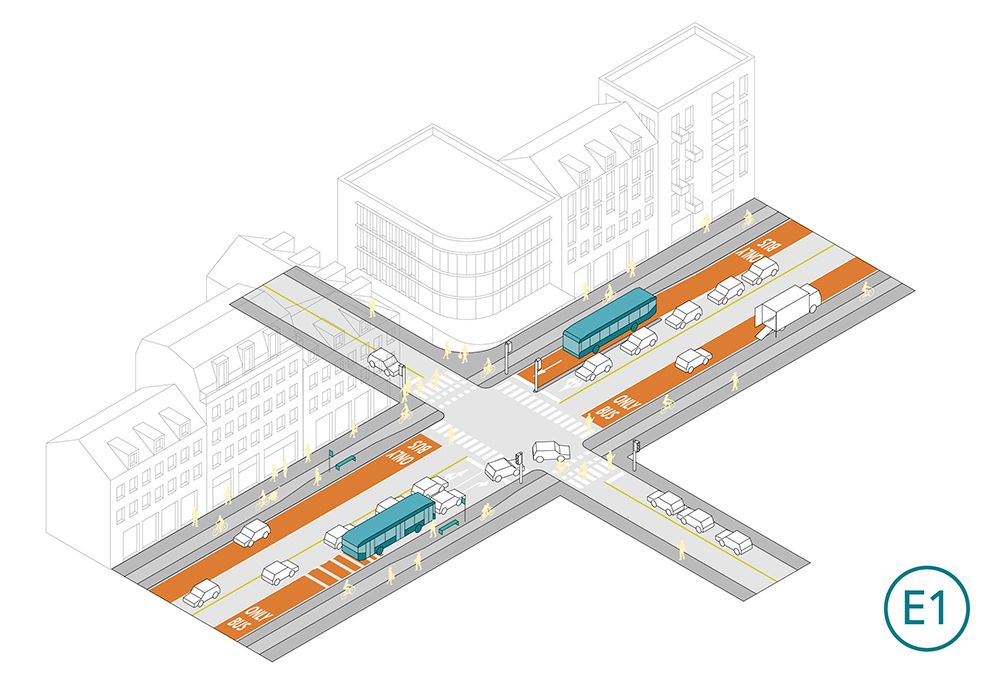
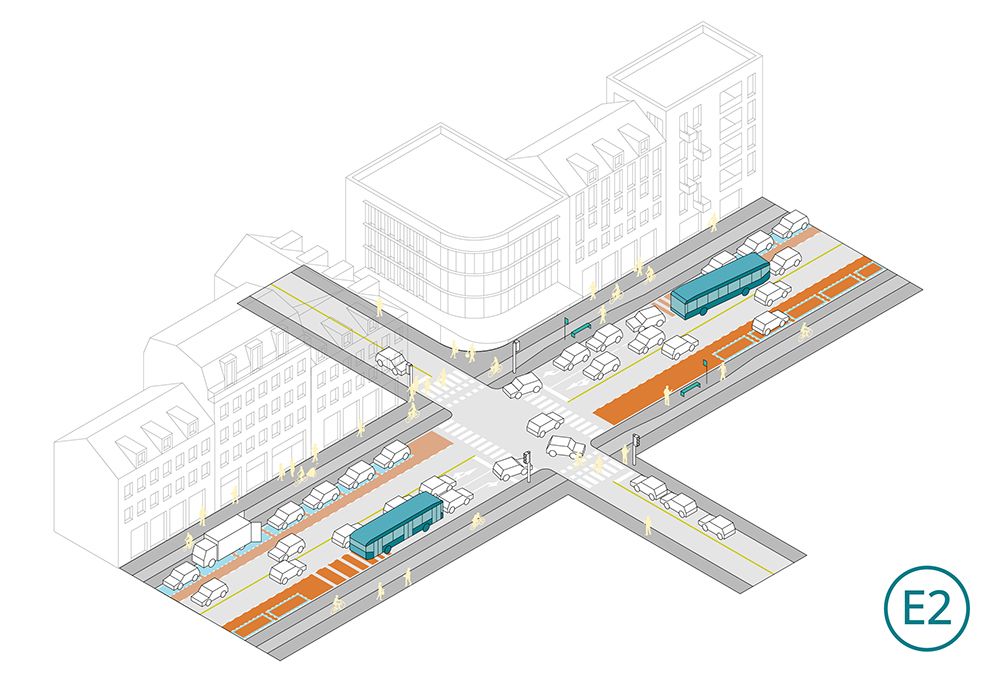
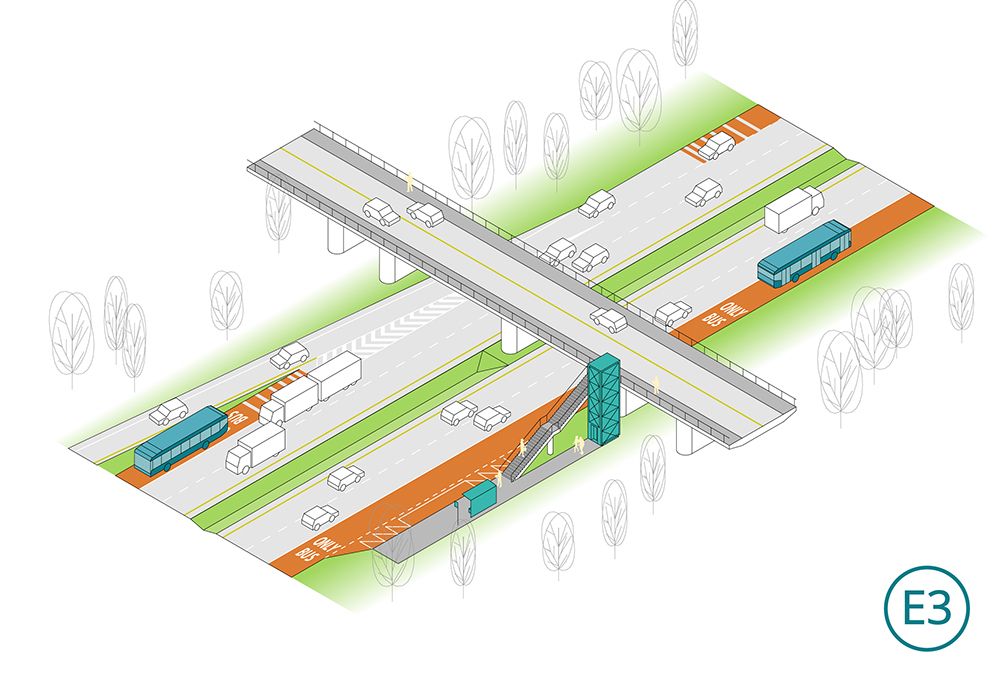
E - Curbside Transit Lanes
The transit-dedicated lanes are located alongside the curb.
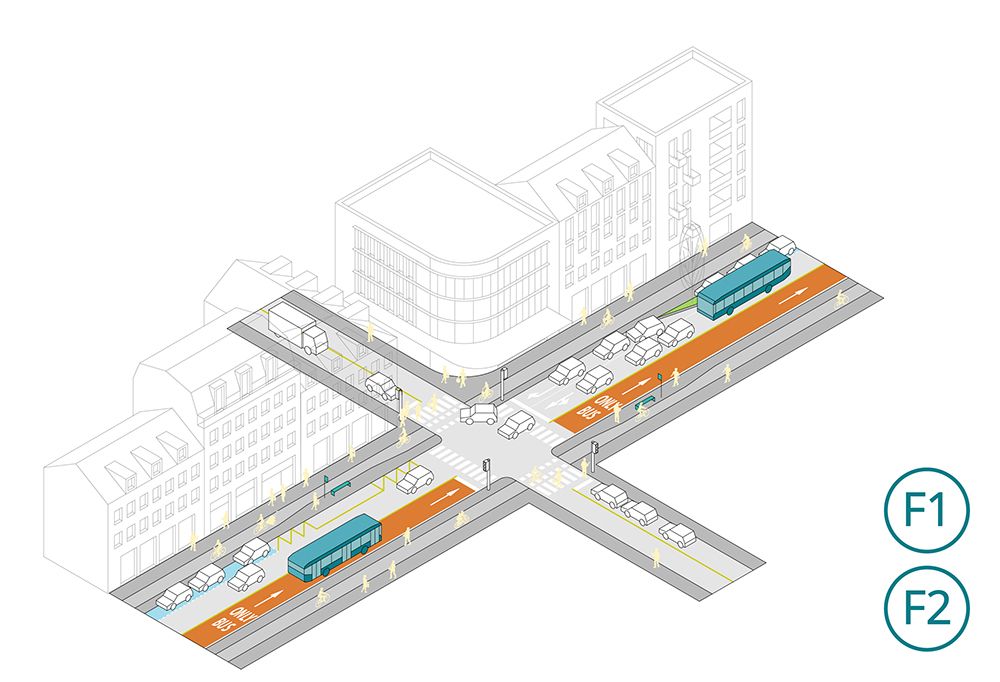
F - Contraflow Transit Lanes
One direction of a two-way street is reserved for transit.
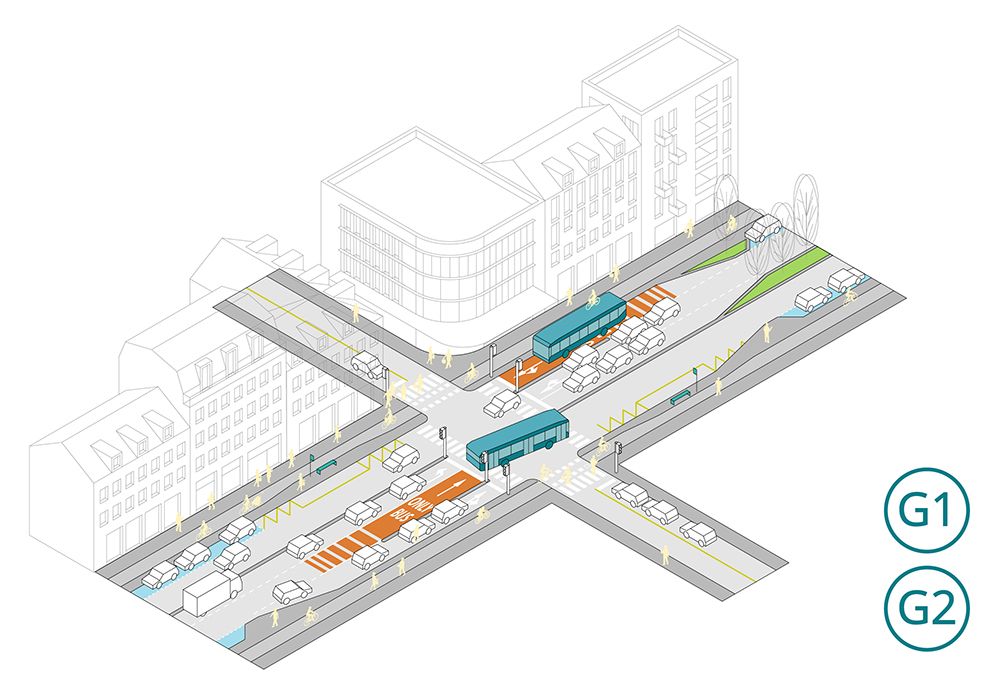
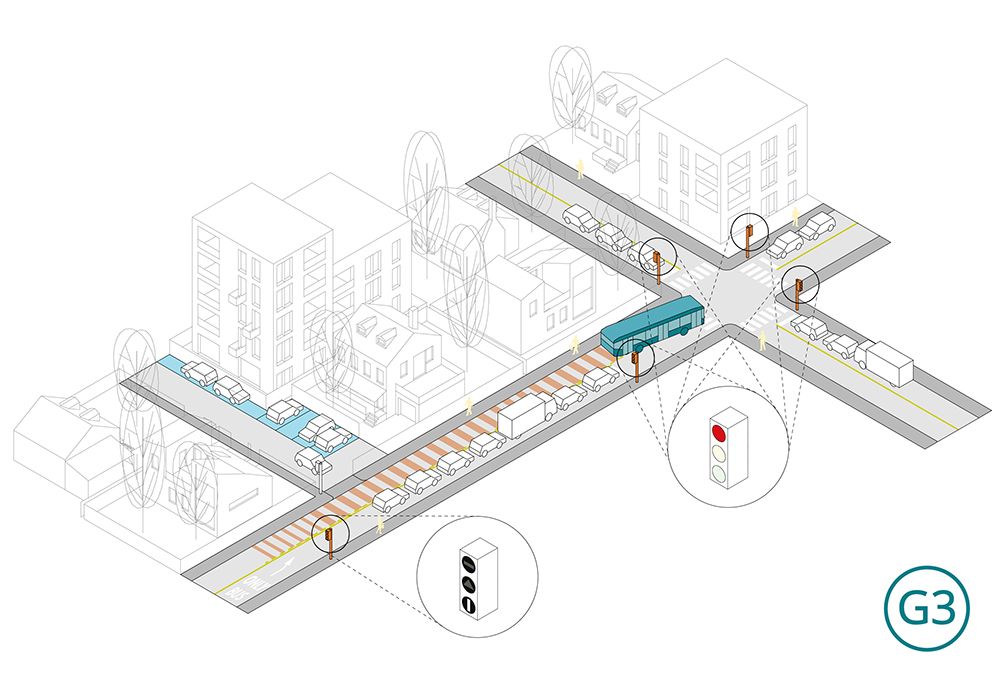
G - Queue Jumps
A short transit lane is deployed before an intersection to bypass queues.
Localized Measures
This category includes transit-priority measures that are localized rather than linear and typically target points of delay, such as intersections and stops, as well as strategies to reduce “transit signal delay,” i.e. delays caused by waiting at red traffic lights, a set of measures broadly defined as transit signal priority (TSP).
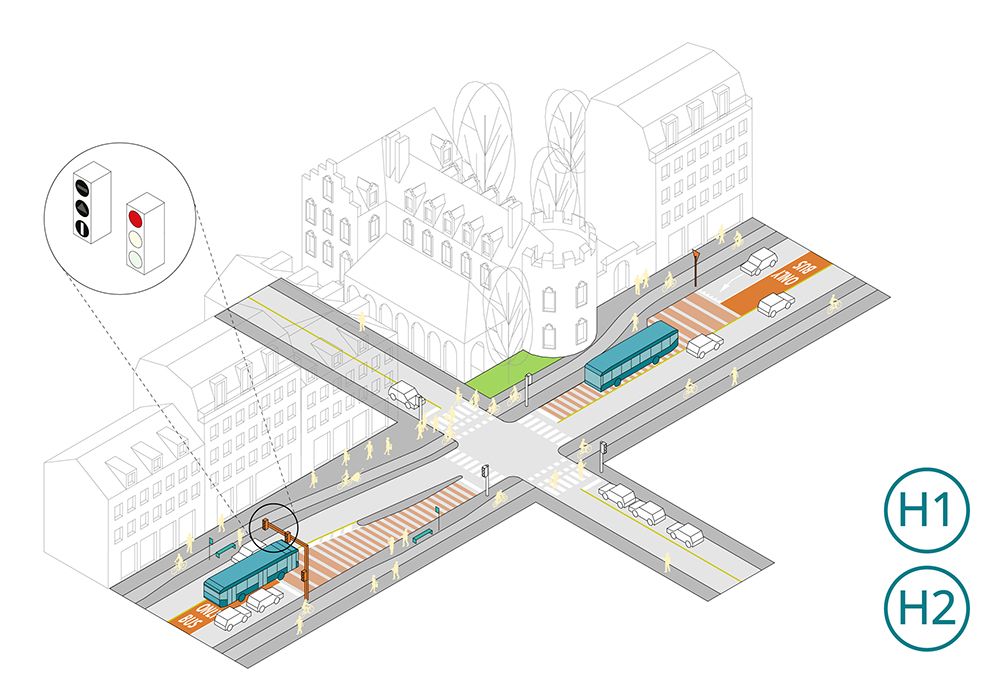
H - Pre-Signals / Pre-Yields
Priority is given to transit vehicles entering a mixed-traffic section.
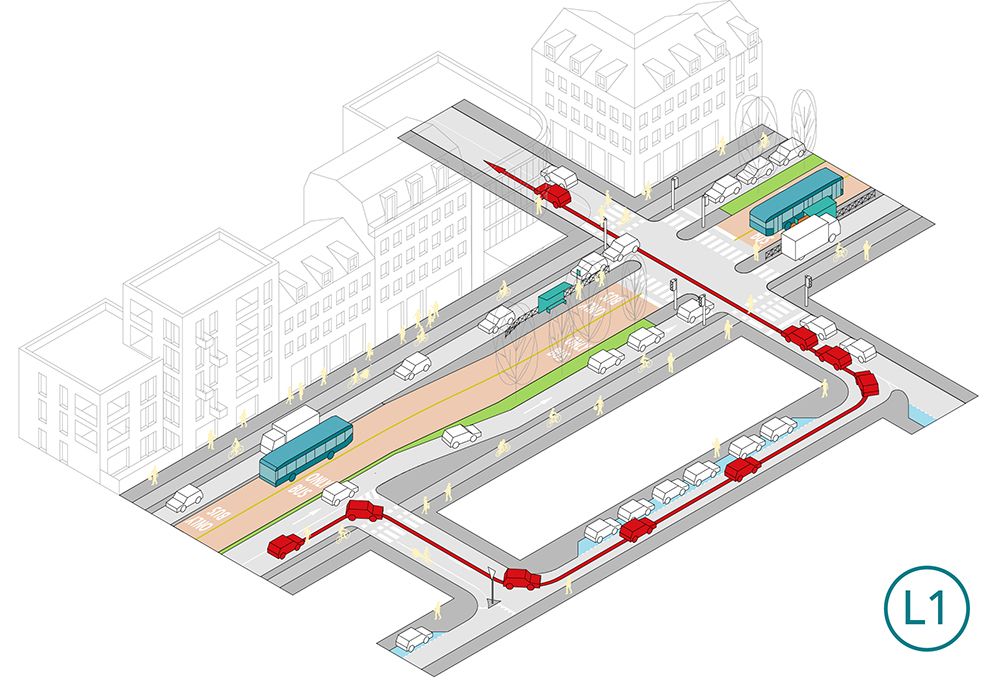
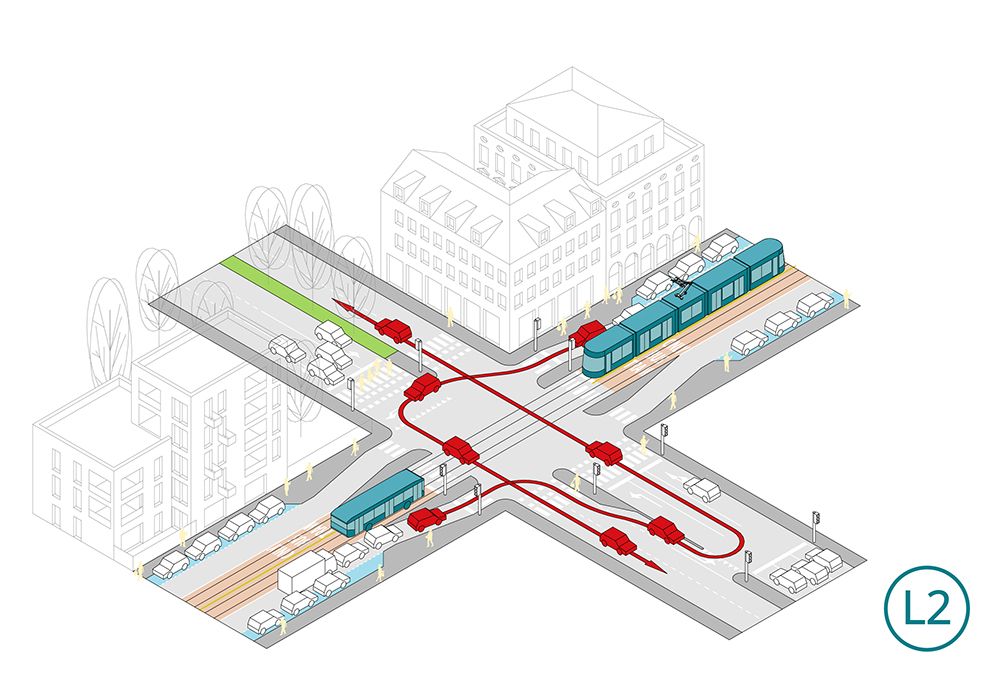
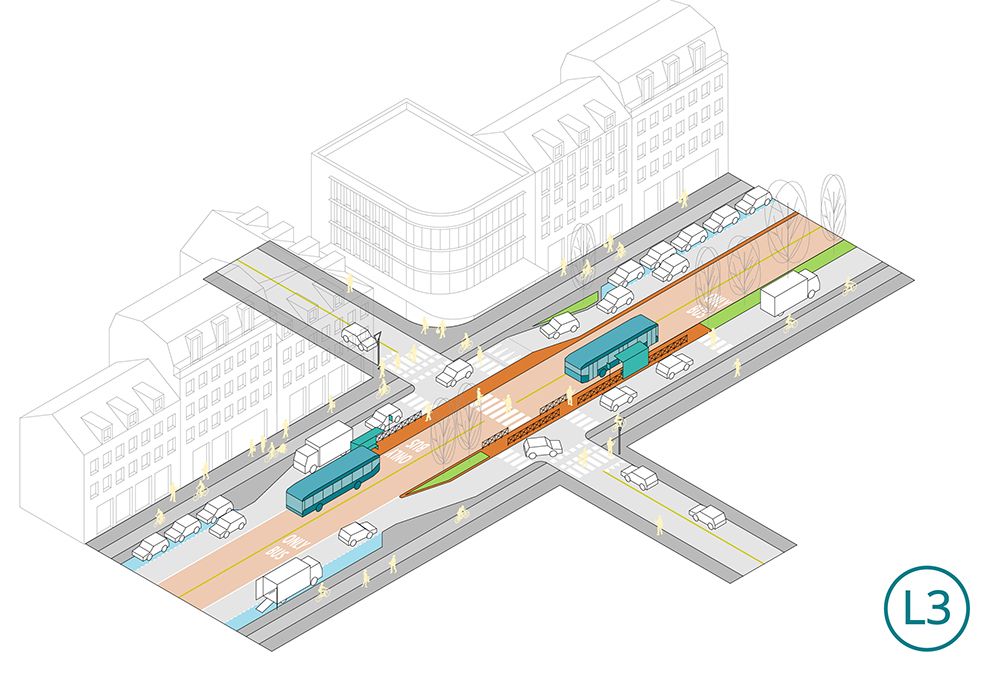
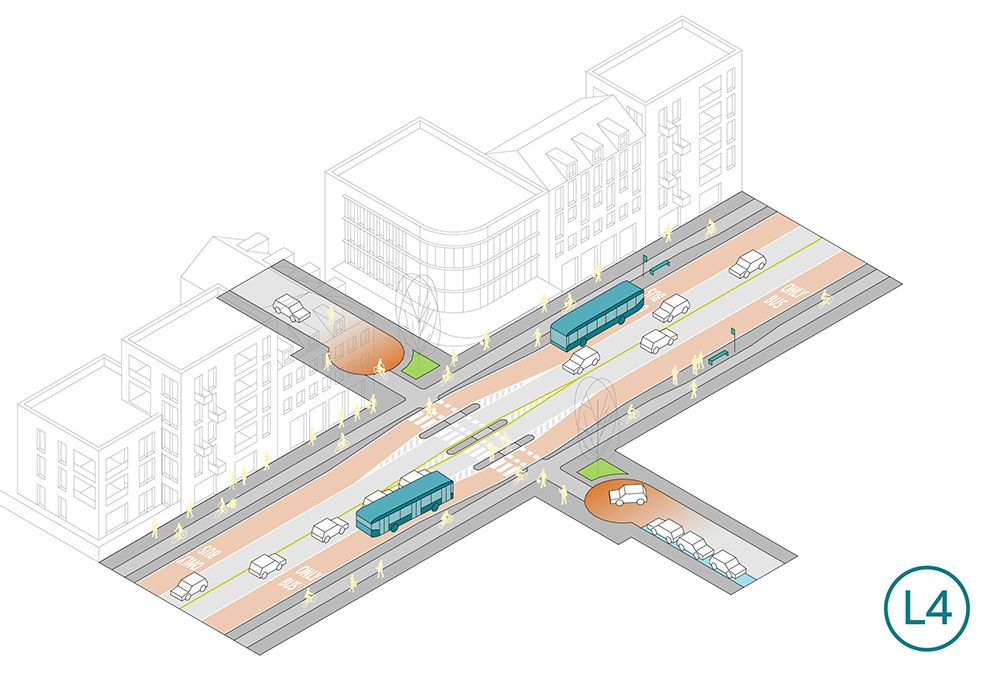
L - Turn Conflicts Management
Strategies to reduce or eliminate delays caused by conflicting movements at intersections.
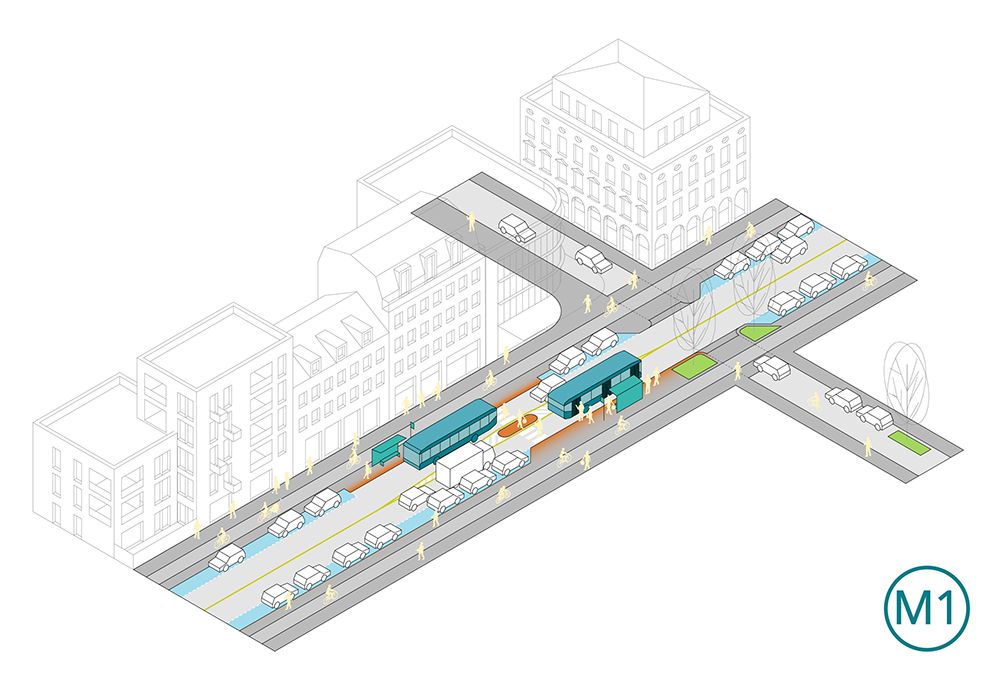
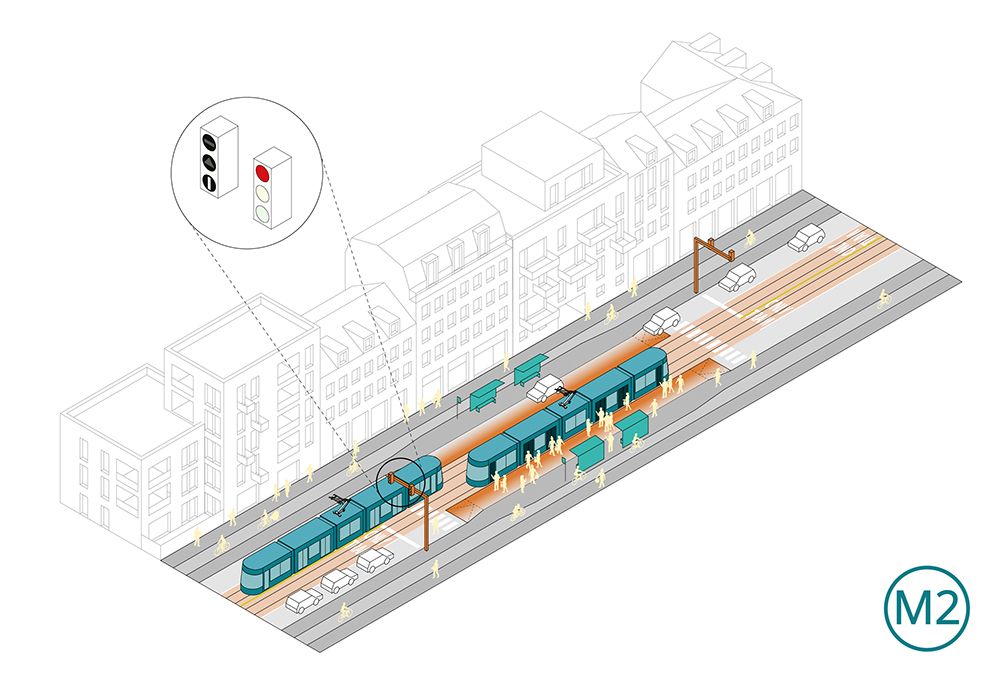
M - Bus Stop Related
Physical setups that reduce delays caused by stopping to pick up and drop off passengers.
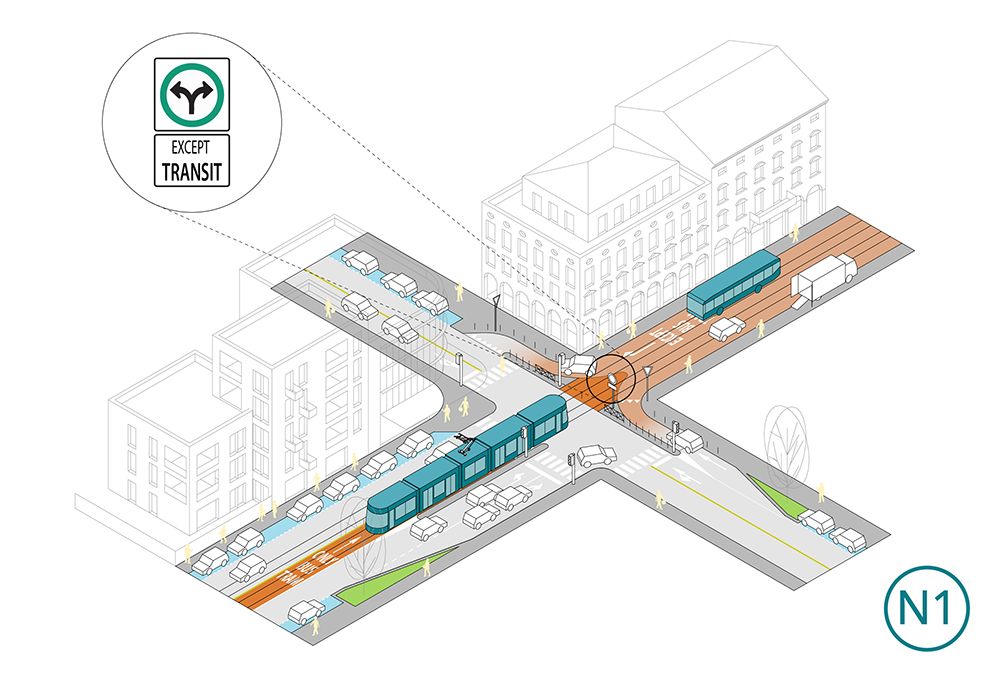
N - Transit Modal Filters
An arrangement that filters traffic at a control point, allowing only transit vehicles to go through.
TSP - Transit Signal Priority
A set of strategies that reduce or eliminate delays caused by waiting at a red light. ***This section is under development. Stay tuned!***
Area-wide measures
This category includes measures that cover large areas through access permitting, pricing, or other broad traffic management measures. While these measures don’t specifically target transit priority, they do improve transit performance by reducing background traffic and lowering private-vehicle demand in the targeted area.
Z - Areas With Access Restrictions
A policy that reduces background traffic by restricting access to an area to a limited category of private vehicles.
W - Congestion/Road Pricing
A scheme that reduces background traffic by charging a fee to vehicles entering an area.