Provide a Shortcut for Transit
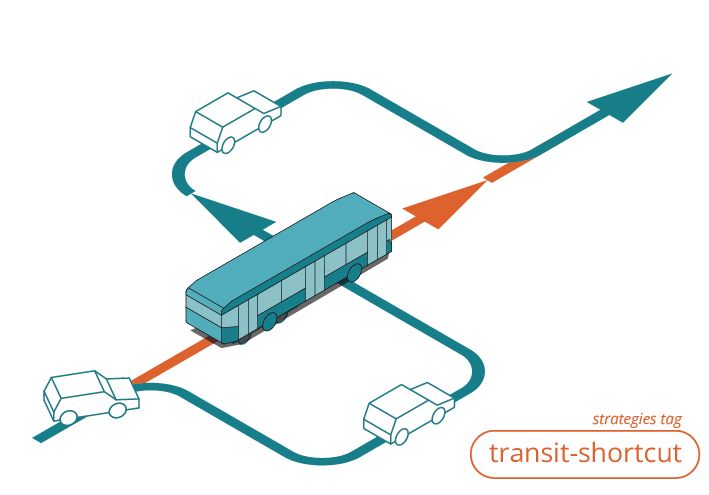
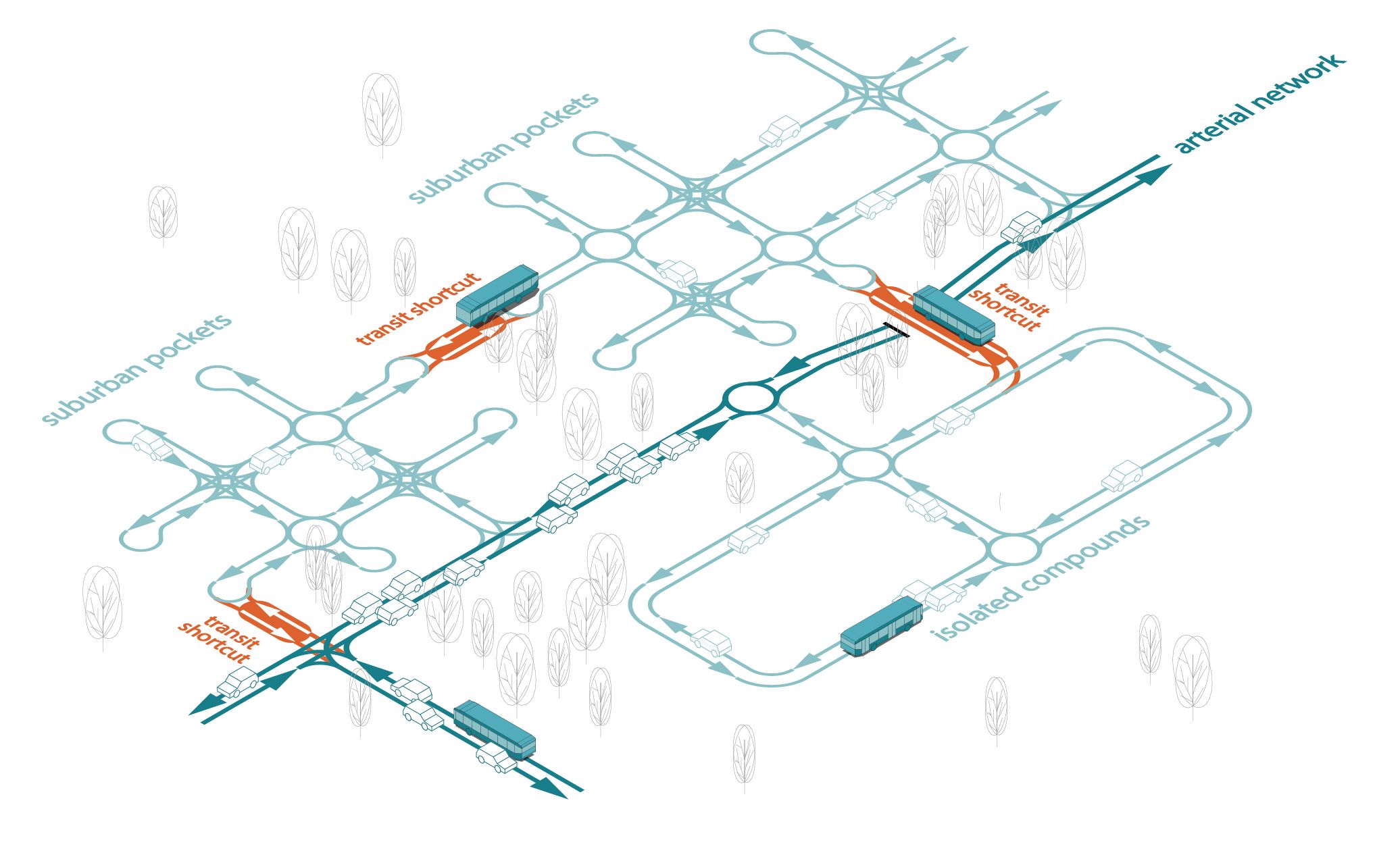
In some contexts, the main cause of delay is not traffic itself but rather the nature of the road network, which lacks key links necessary to provide the shortest and most efficient path between destinations along a transit route. The fragmented road network of modern car-era suburbs can be particularly hostile to fixed-route transit. Destinations, such as homes, schools, and shops, are often located away from the arterial network, where local circulation is organized in isolated pockets and cul-de-sac layouts, forcing bus service into time-consuming looping patterns. The most effective strategy in these contexts is to provide transit with a dedicated, more direct link, a transit-only shortcut, reducing the detours imposed by following the regular road network.
Use Cases
Short segments of Transit Ways (A2) are generally the tool used to establish these missing links. Physical barriers such as car traps, retractable bollards, and other barriers can be deployed to prevent unauthorized vehicles from using them. Transit shortcuts can be retrofitted into existing suburban road networks or be part of the traffic management strategy from the onset. They are routinely used in suburban contexts in the Netherlands as a way to create transit shortcuts in the otherwise isolated local traffic pockets typical of low-traffic suburban greenfield neighborhoods from the 1970s, such as the bloemkoolwijk or cauliflower neighborhood characterized by tree-like, highly hierarchical road structures, but there are notable examples in Scandinavia, Germany, France and even in the United States, such as in Eugene’s EmX BRT.