Lyon: Montée des Soldats
Tools: b4g1-g1l3
Strategies: transit-priority-corridorsintersections
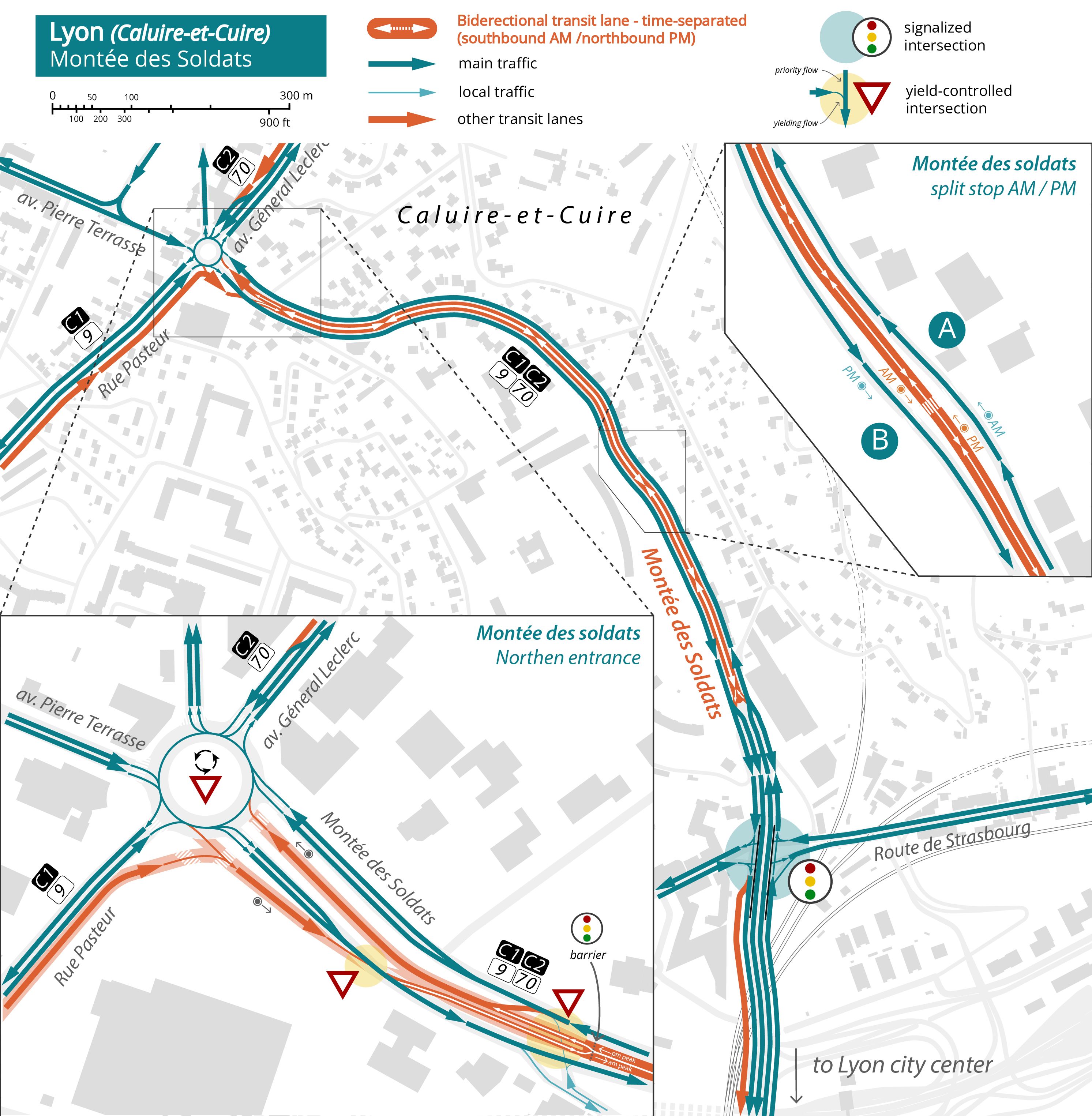
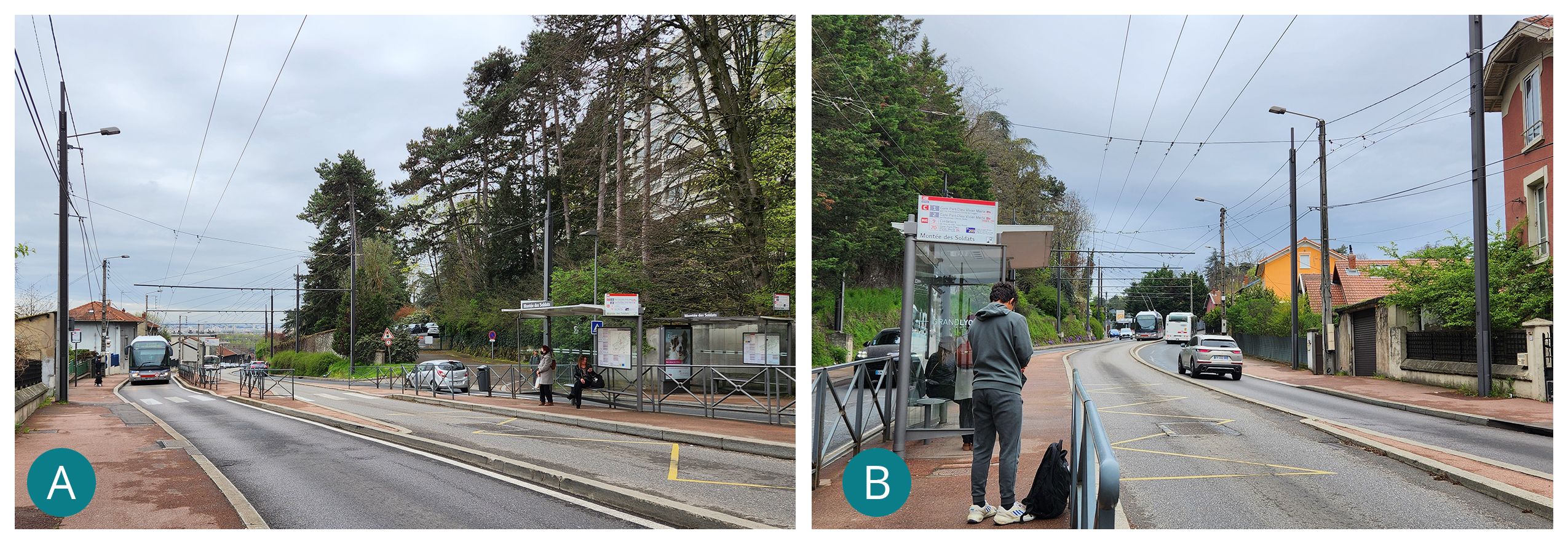
The Montée des Soldats in Caluire-et-Cuire, a suburb of Lyon, is a major traffic corridor leading to the Poincaré bridge over the Rhône, a major point of access into Lyon’s left-bank central area from the North, and is confronted with long queues during peak hours because it represents a traffic bottleneck. As part of the implementation of the C1 and C2 BHNS (Bus with High Level of Service) project in the early 2000s, the road was redesigned to include a curb-protected, dedicated transit lane extending over 1 km (0.6 miles). The alternate-direction lane is managed via temporal separation: inbound buses use it during the morning hours, while outbound buses use it during the afternoon and evening hours, with a one-hour safety buffer when the lane is not used. Access is controlled by a movable bar. Outside of these hours, buses use the general traffic lane. The in-dedicated lane stop has split lateral platforms for each direction and is doubled on both general traffic lanes. The trolleybus overhead wire is doubled, running above both the general traffic and the dedicated lane for each direction.
At the northern end, the lane terminates at a roundabout where several bus lines converge into the corridor. Northbound buses have a dedicated stop on a curb-protected queue-jump lane that can be used 24/7, while southbound buses use a lateral bus stop lane that can be accessed both from the roundabout and the curb-side lane on rue Pasteur via a transit-only slip lane, skipping the roundabout. Buses then cross through the general traffic lane to reach the center-running lane, a conflict managed via a simple yield. This infrastructure is used by the frequent trolleybus lines C1 and C2, as well as two additional bus lines, for a total of up to 28 buses per hour in each direction during the peak hours.