New York: Downtown Brooklyn
Tools: a1f1-f2c1
Strategies: divert-through-trafficcurb-friction
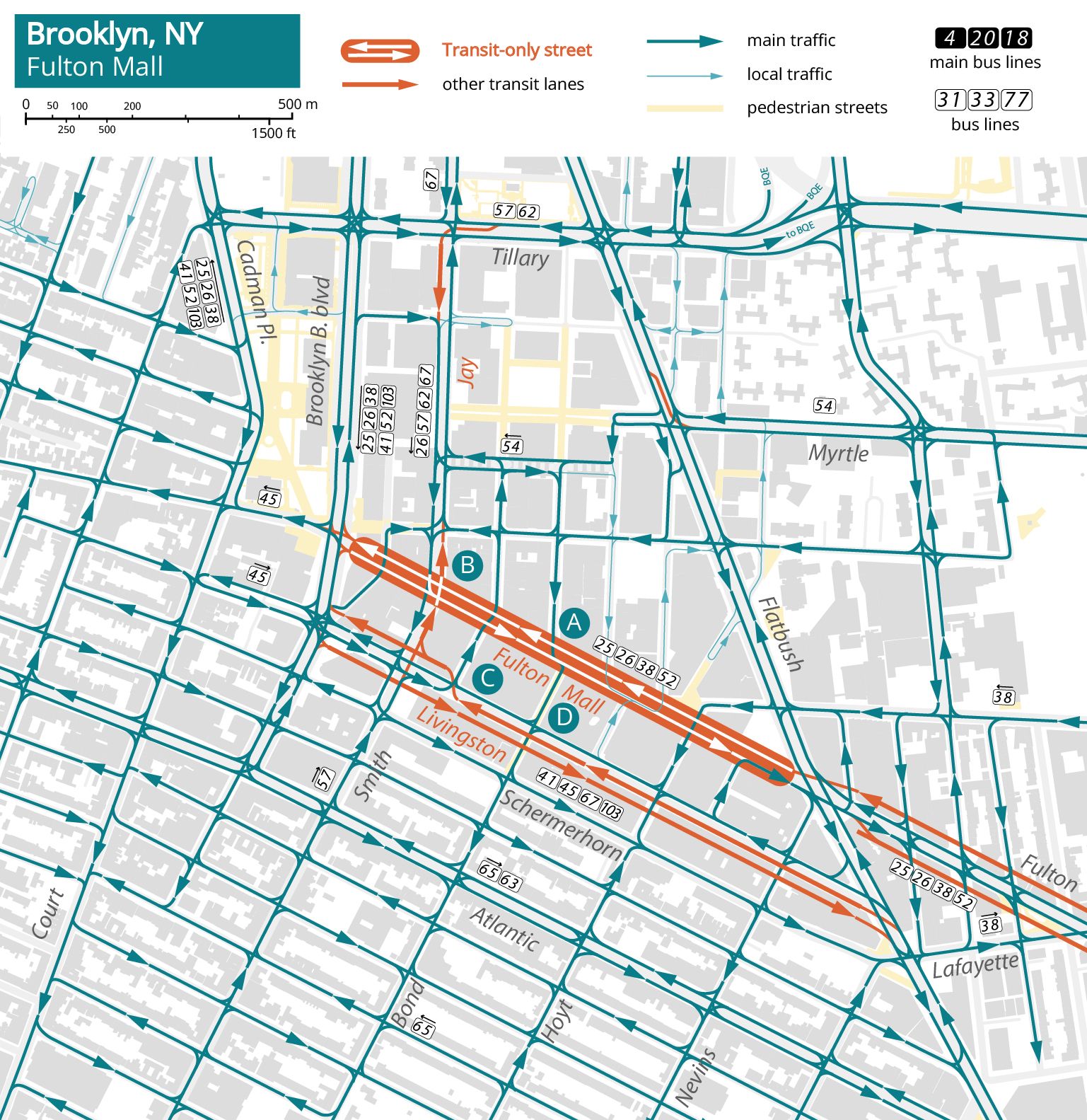
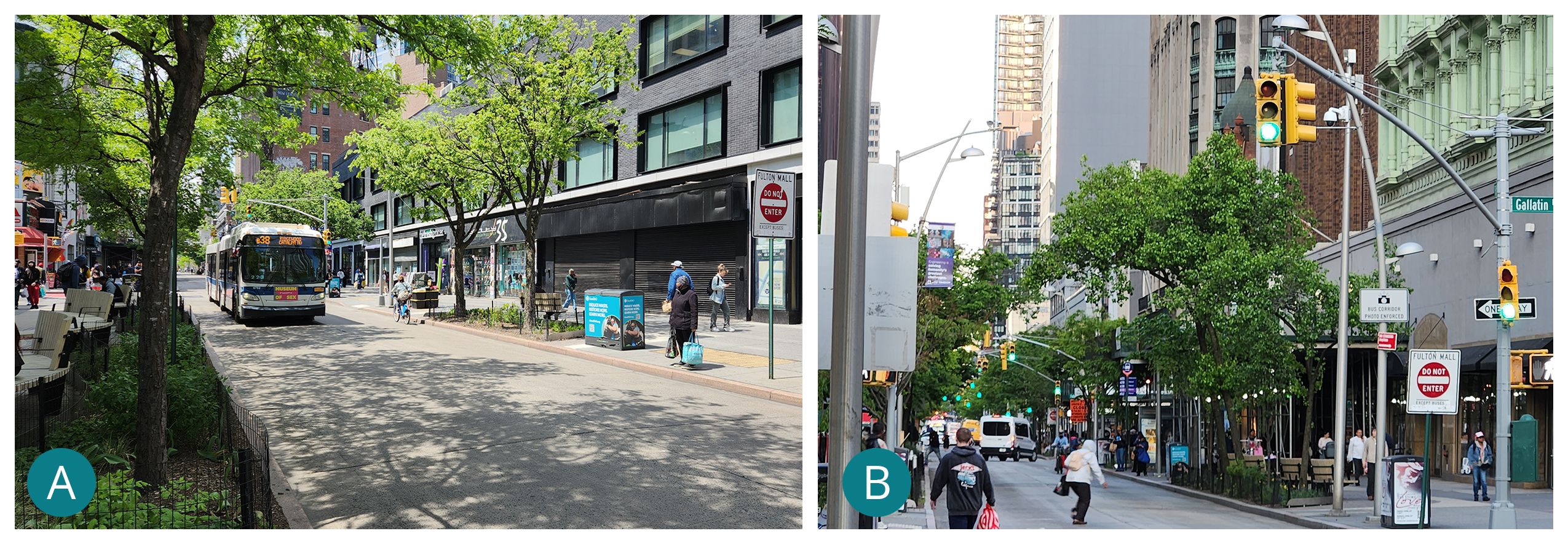
Fulton Street Mall in Downtown Brooklyn, New York, was established in 1974 and is among the first generation of Transit Malls in the U.S. It underwent extensive physical renovations in the 1980s, including widening sidewalks and installing new street furniture. The scheme was backed and strongly supported by the local merchant association. Together with the parallel Livingston Street, it represents the main bus access to downtown Brooklyn’s transit hub for buses coming from the southwest, including the busy transit corridors of Fulton and Flatbush. During the peak, up to 40 buses per hour use the Fulton Street Transit Mall. Deliveries are allowed on lateral streets or along the mall between 7 pm and 7 am.
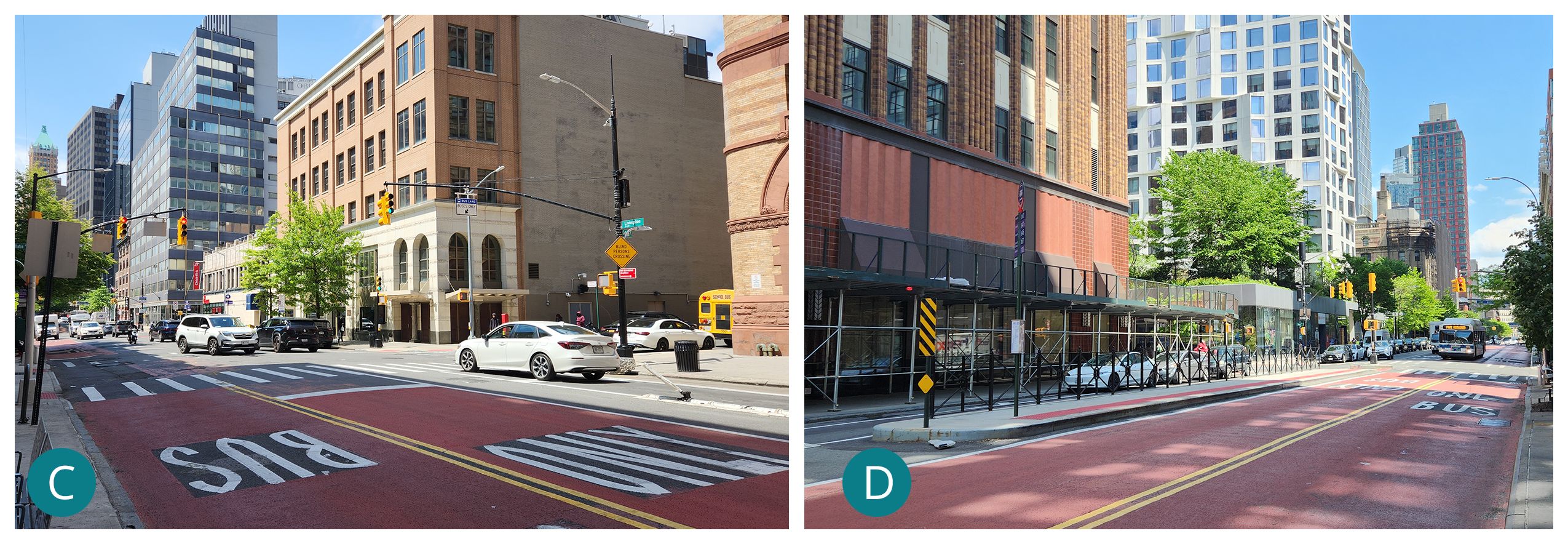
As part of the Better Bus NYC DOT program, traffic patterns on the perpendicular Jay Street have been rearranged since 2020 to restrict through traffic between Livingston and Tillary to buses and trucks only, while permitting local access only from lateral streets. In 2024, the parallel Livingston Street, another major bus corridor in Downtown Brooklyn, was redesigned from an offset configuration to an edge-running one to improve pedestrian safety and reduce curb friction.
However, the general traffic arrangement in downtown Brooklyn is still dominated by alternating one-way streets, and traffic is allowed to cross the three bus corridors at every block, with an overwhelming majority of intersections controlled by traffic signals.