Transit Lanes on Freeway Shoulders
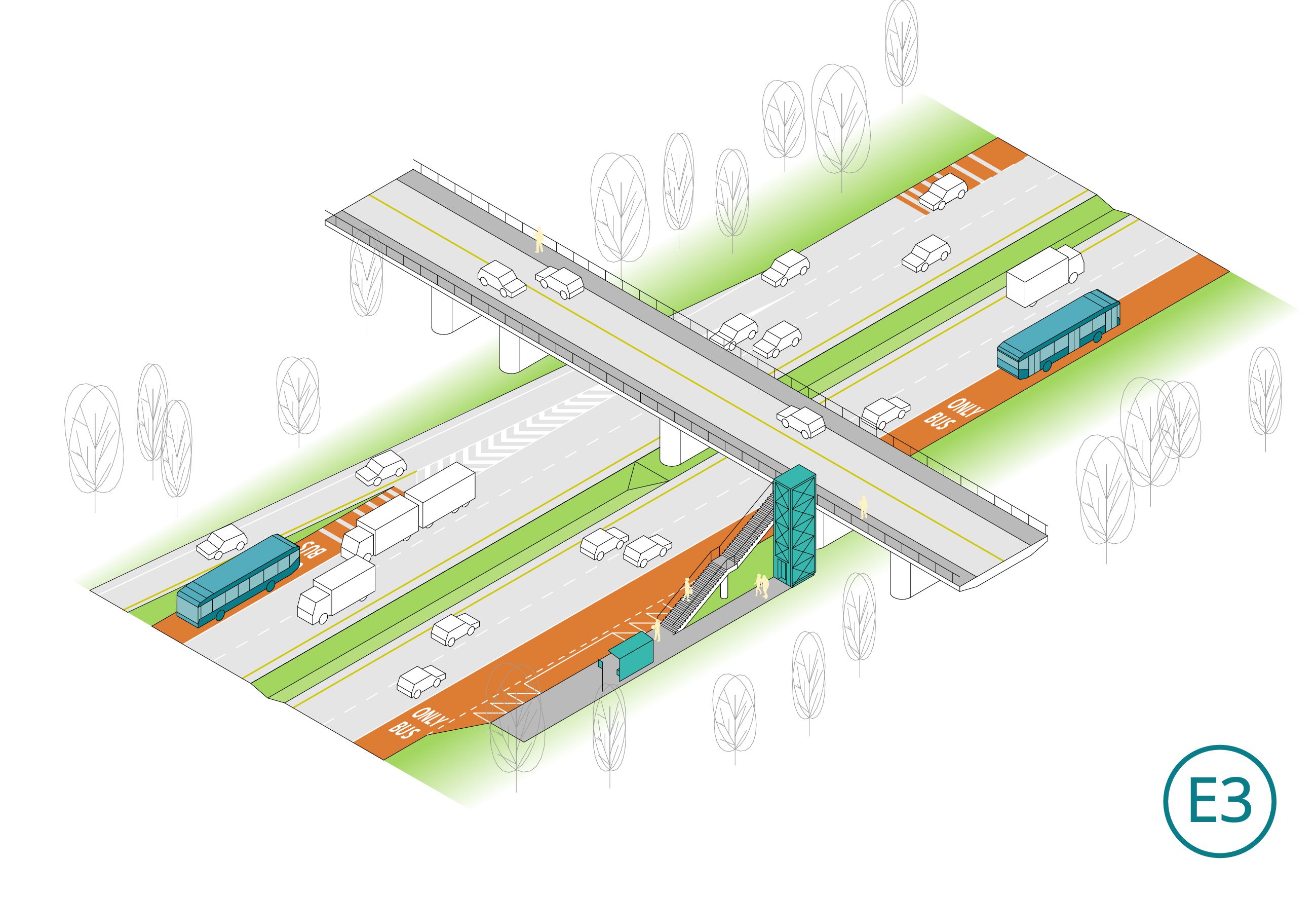
Transit Lanes on Freeway Shoulders, also known as “bus-on shoulder,” “part-time shoulder use,” or “hard shoulder running,” are an easy-to-deploy, relatively low-cost solution to provide priority to express buses on limited-access highways. Shoulders, also known as emergency lanes in some jurisdictions, are normally used for emergency stops, breakdowns, and emergency vehicles to bypass traffic congestion, and they can be repurposed as bus lanes during peak hours. They are easier to implement than center-running lanes on highways; however, the areas around off- and on-ramps can be a source of conflict and potential delays when heavy traffic causes queue overflow onto the highway.
Key Facts
- Stops
- They can be located directly at the curb, often in a pull-out bay
- Left Turns
- N/A
- Right Turns
- Buses running on the shoulders can conflict with vehicles merging to reach the off-ramp.
- Parking
- N/A
- Enforcement
- Enforcement is usually based on cameras and highway traffic enforcement
- Transit Signal Priority
- N/A
- Cost
- Minimal, as it can be implemented with painted markings and road signs. However, It can be more expensive if road widening is necessary to ensure sufficient width or if stops need to be added.
Use Cases
Minneapolis is credited as being among the first cities to implement a systematic “bus-on-shoulder” policy in 1991, to prioritize express bus routes on its sprawling freeway network, now totalling more than 250 miles. This solution has since gained popularity across the U.S., and in Canadian provinces like Ontario and Québec. While the practice is less common outside of North America, there are notable examples in the Netherlands, Germany, France, Israel, and the United Kingdom, among others.