Bus Bulbs
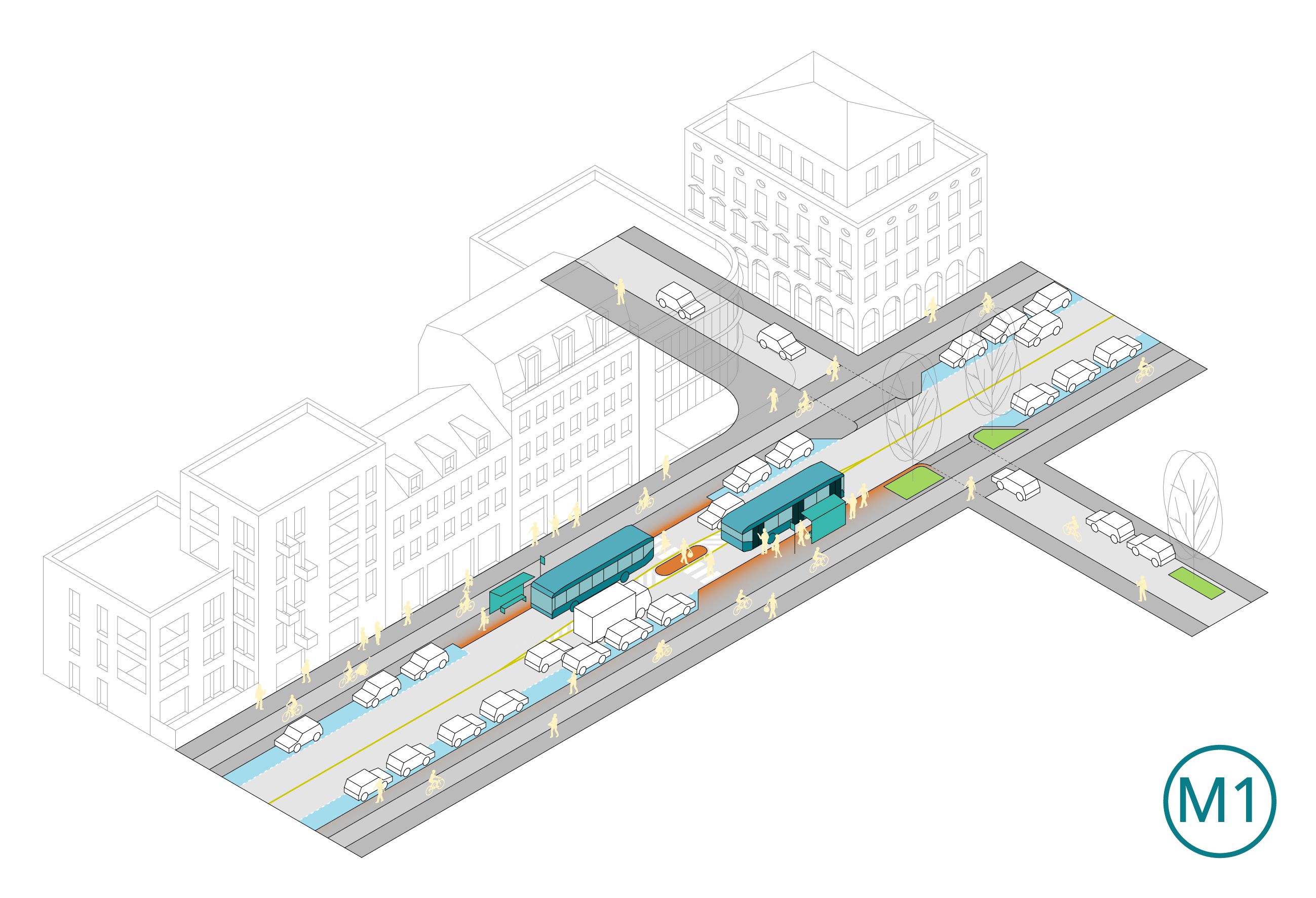
Bus bulbs extend boarding platforms into the parking lane to allow buses to load passengers without pulling out of the main traffic flow. They are an effective solution to reduce delays for buses caused by exiting and re-entering traffic. They also prevent illegal parking at bus stops, a common problem in traditional pull-over setups. On two-way streets, bus bulbs can be coupled with a physical setup, such as a continuous curb or a pedestrian island, to prevent traffic from overtaking the bus during the dwell. These setups have a dual function: they make crossing for pedestrians safer and reduce delays for buses by decreasing queue buildup at downstream intersections.
Key Facts
- Stops
- Bus bulbs reduce the stop penalty by allowing in-flow boarding. Overtaking prevention measures increase pedestrian safety and reduce queue buildup at downstream intersections.
- Left Turns
- N/A
- Right Turns
- N/A
- Parking
- N/A
- Enforcement
- Bus bulbs physically discourage prevent illegal parking at bus stops, especially when coupled with overtaking prevention.
- Transit Signal Priority
- N/A
- Cost
- Medium, as it requires reconfiguring the curb and sidewalk and possibly the drainage. Cheaper pre-fabricated temporary solutions exist.
Use Cases
Bus bulbs have been widely used and are part of an approach to bus service that systematically targets the causes of delays. However, measures to prevent overtaking are less common.