Transit and Direct Access Street
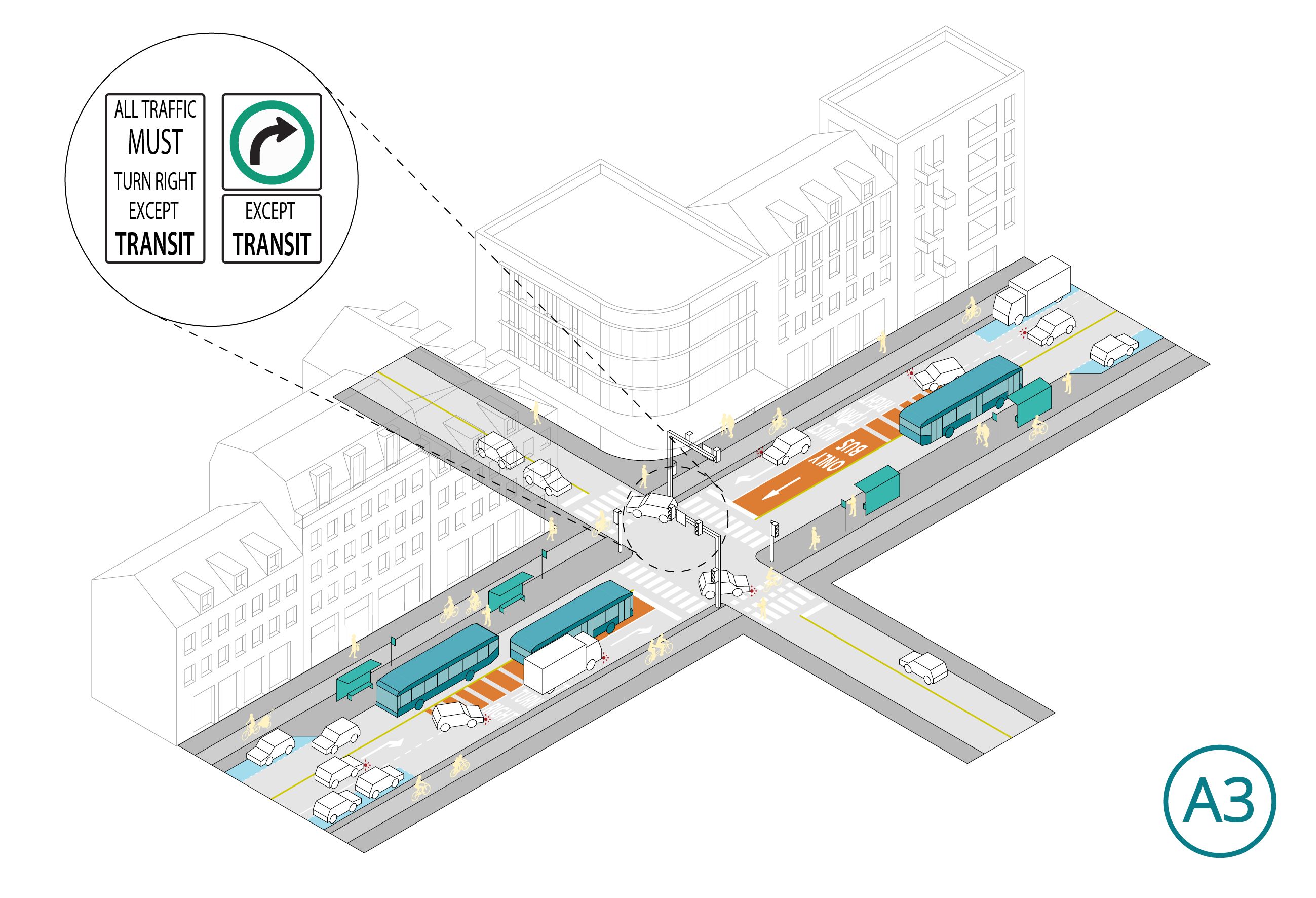
Transit and Direct Access Streets are urban streets where only transit is allowed to continue through at intersections. General traffic is permitted in both directions, but only for one block, as vehicles must exit the street by turning right at the nearest intersection. The intended goal is to prevent through traffic from using the corridor, while maintaining direct access to properties. This solution, which relies solely on compulsory direction control, is prevalent in North America as a means of balancing transit priority with unrestricted property access, without the need for a permitting system.
Key Facts
- Stops
- Stops are generally located on sidewalks, ideally on the far side of intersections. On busy corridors, staggered stops are used to accommodate high volumes of buses stopping.
- Left Turns
- Left turns are generally prohibited in two-way transit and local access streets.
- Right Turns
- Right turns are not only allowed, but are compulsory for most vehicles at every block. Conflict with transit going straight is generally mitigated with a separate right-turn lane.
- Parking
- On-street parking and delivery are generally allowed, even though parking maneuvers can delay transit in two-lane streets.
- Enforcement
- Enforcement can be complicated, generally relying on drivers respecting road signs mandating right turns.
- Transit Signal Priority
- Active TSP can be implemented, even though its effectiveness depends on the ability to provide reliable estimated times of arrival (ETAs), which can be difficult with near-side stops or delays caused by encroachment from parking vehicles and deliveries.
- Cost
- Minimal, as it can generally be implemented with road signs and horizontal markings, though it may require more substantial modifications to traffic lights or intersection design.
Use Cases
Transit and Direct Access Streets are typically used in busy transit corridors with heavy bus traffic and high curb activity, usually on streets in city centers or busy commercial hubs. They are preferred to Transit Streets (A1) in jurisdictions where it would be legally, politically, or culturally difficult to establish a permitting system to grant access to residents and other categories of drivers accessing properties along transit corridors, especially for occasional users such as visitors reaching shops, hotels, or public parking. Most examples are located in North America and have been implemented since the early 2000s.