Transit Modal Filters
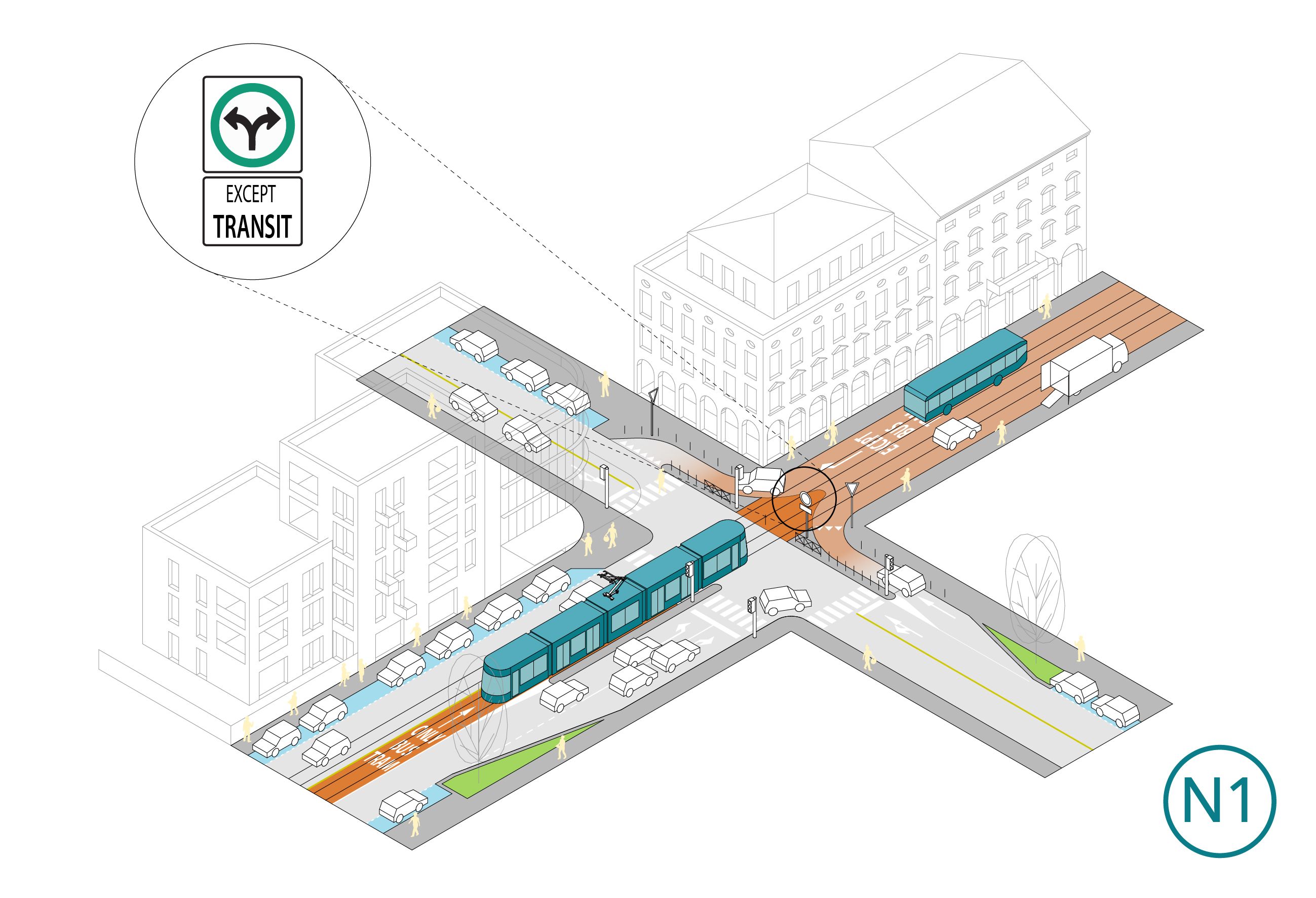
Transit modal filters are localized devices that allow transit to proceed through a given pinchpoint while preventing general traffic from doing so. They can be enforced via simple road signs or with physical barriers, such as retractable bollards, movable gates, or physical traps. Functionally, they work very similarly to short segments of transit streets (A1).
Key Facts
- Stops
- Transit stops can be integrated into modal filters.
- Left Turns
- N/A
- Right Turns
- N/A
- Parking
- N/A
- Enforcement
- Transit modal filters can be enforced with road signs and paint or physical barriers, such as retractable bollards and barriers, as well as traps.
- Transit Signal Priority
- Modal filters can incorporate active TSP when located at an intersection. Indirectly, they can positively impact the effectiveness of TSP by minimizing upstream traffic at an intersection, improving its capacity and enabling better forecasting of estimated times of arrival for active TSP.
- Cost
- Minimal to medium, depending on whether they require installing physical barriers or modifying the road and intersections.
Use Cases
Modal filters have been used in traffic planning since the 1970s, especially to prevent general through traffic from encroaching on residential streets while allowing maximum permeability for pedestrians and cyclists. In their transit version, they are intrinsically tools intended for enabling circulation-based approaches to transit priority and are functionally very similar to short segments of Transit Streets (A1) or Transit Ways (A2). They prevent most private vehicular through traffic from going past a pinchpoint, with broader effects on traffic intensity upstream and downstream. They can also be used to prioritize transit at problematic nodes that cause delays, such as complex intersections and congested road segments, or to create a transit shortcut.