Reduce Delays From Curb Friction
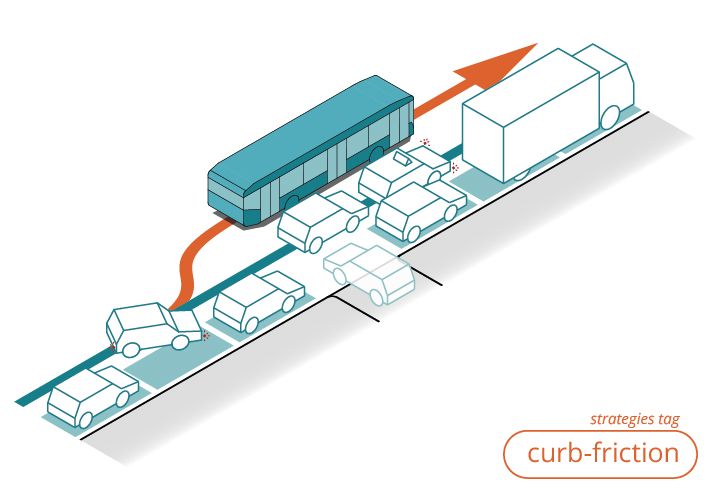
In an urban context, especially in mixed-use neighborhoods with intense sidewalk activity, the demand to access the curb for deliveries, pick-ups and drop-offs, and parking creates friction that slows down transit. Even on multi-lane arterials without curb adjacent bus lanes, transit vehicles generally need to reach the curb so passengers can board and alight.
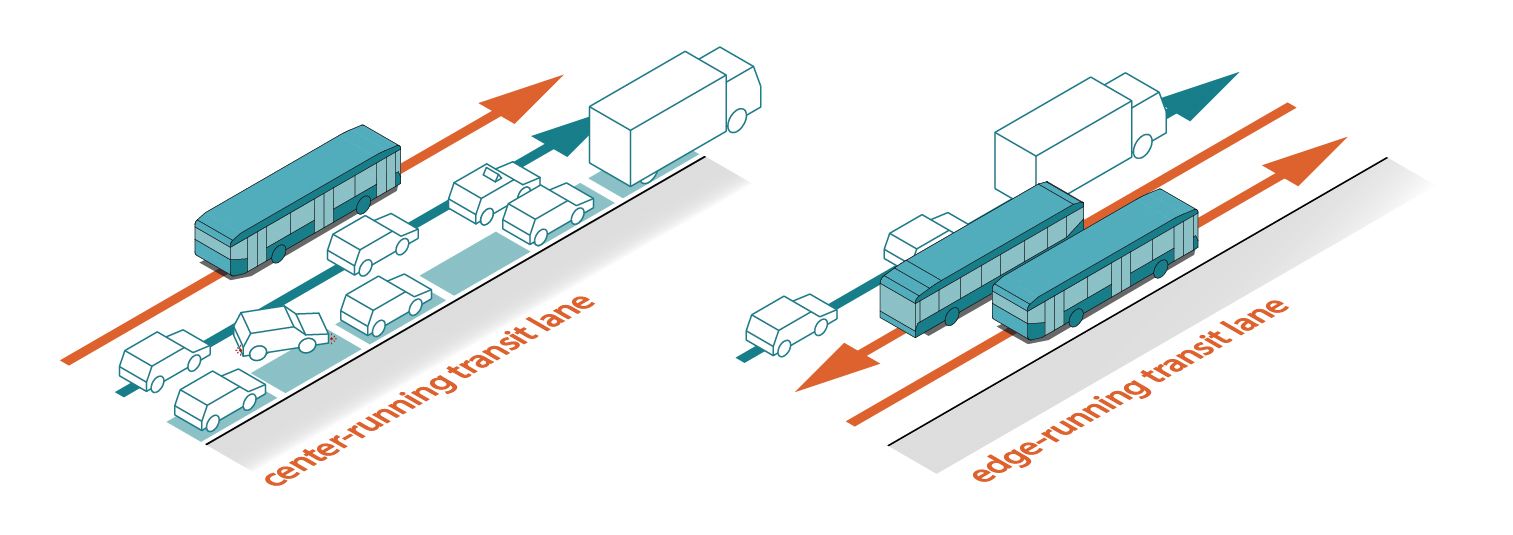
Dedicated lanes can insulate transit from curb friction, depending on their relative position to the curb and whether they can be physically protected from illegal access. Center-running transit lane configurations (B1, B2, B3, and B4) and edge-running ones (C1) are generally insulated from it by design.
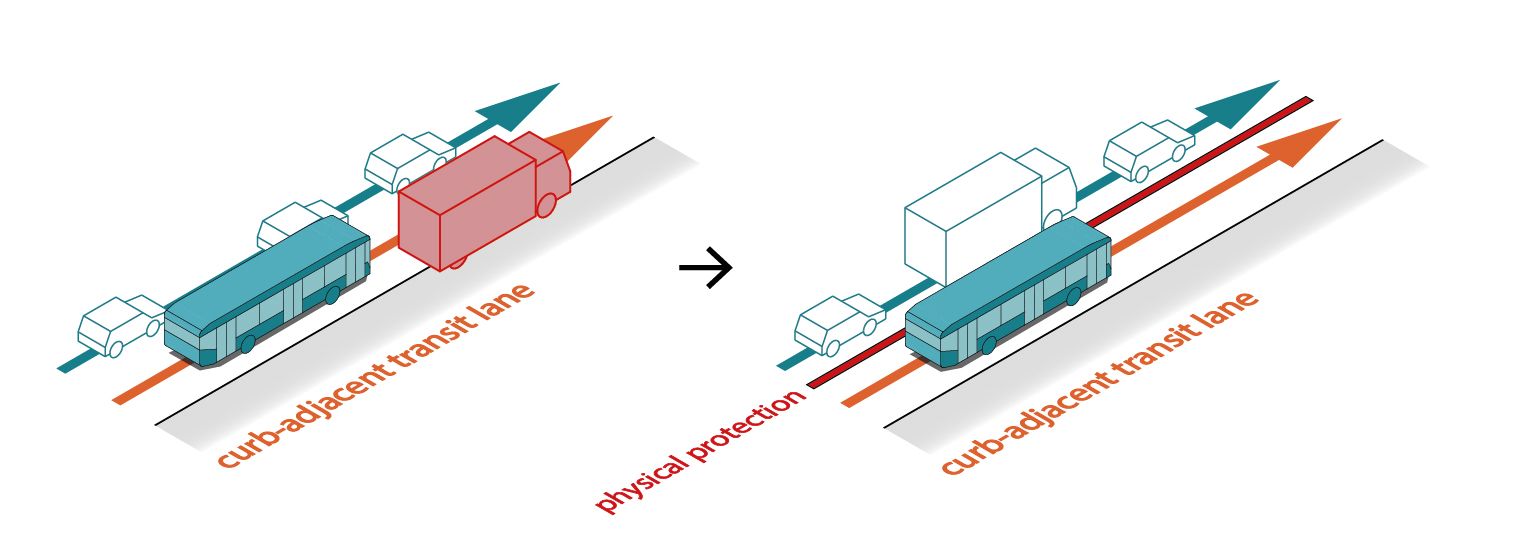
In Curb-Adjacent Transit Lanes (E1), physical separation can deter illegal encroachment, especially hard, non-surmountable curbs and medians.
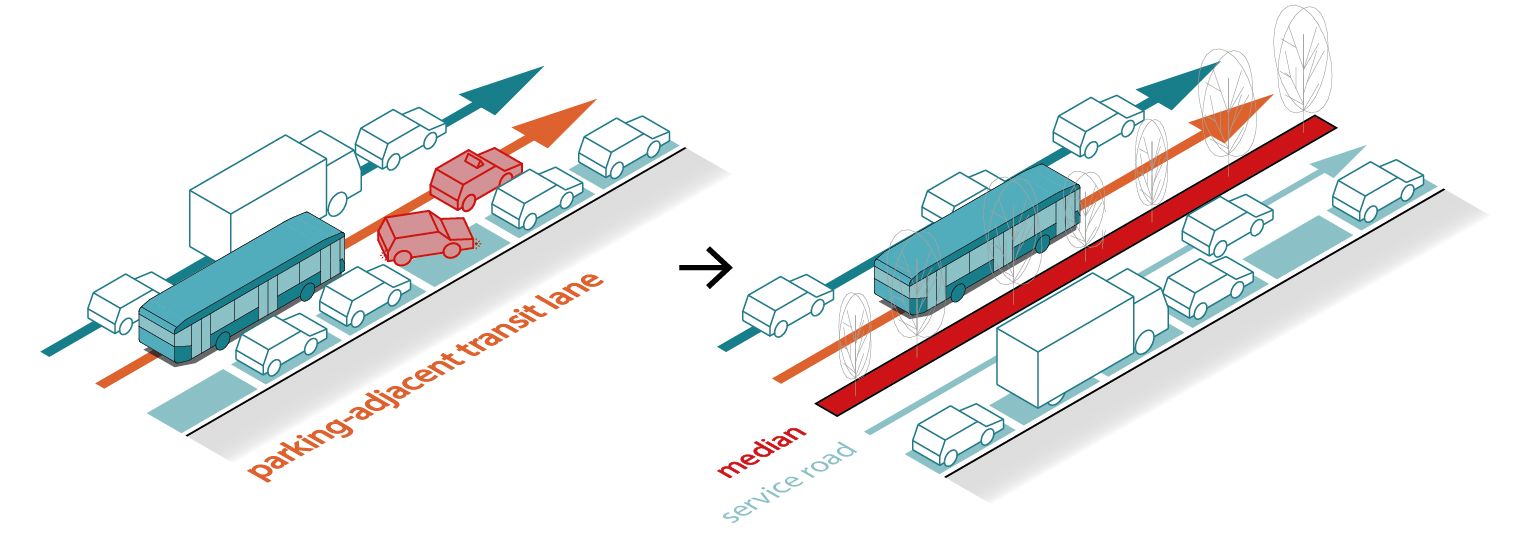
However, other near-curb priority measures, which are widely used for their ease of implementation, are difficult to insulate effectively from curb friction.. In particular, Offset Transit Lanes (D1) and Curb-Adjacent Reversible Parking & Transit Lanes (E2) cannot be physically separated from adjacent lanes, as private vehicles are entitled to enter them to reach curbside parking at all times or during hours when they aren’t operational. However, multi-way boulevards and other urban street configurations with access or service roads serving properties alongside a central thoroughfare can mitigate curb friction.
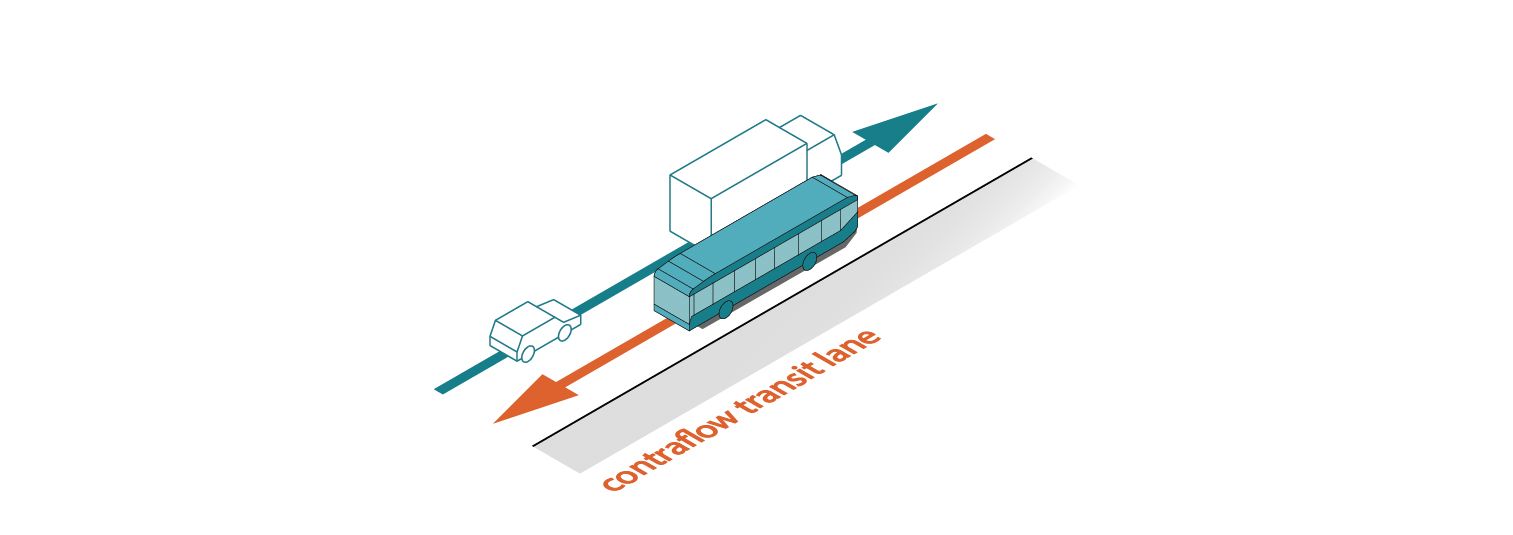
Finally, Contraflow Transit Lanes (F1) are the only type of curb-adjacent transit priority measures that are quite effectively insulated from curb friction by design, as there are no parallel same-direction general travel lanes.