Identify Priority Corridors for Transit
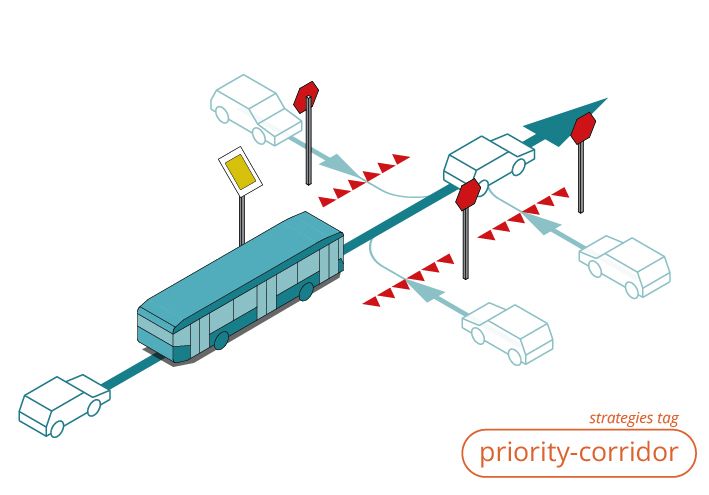
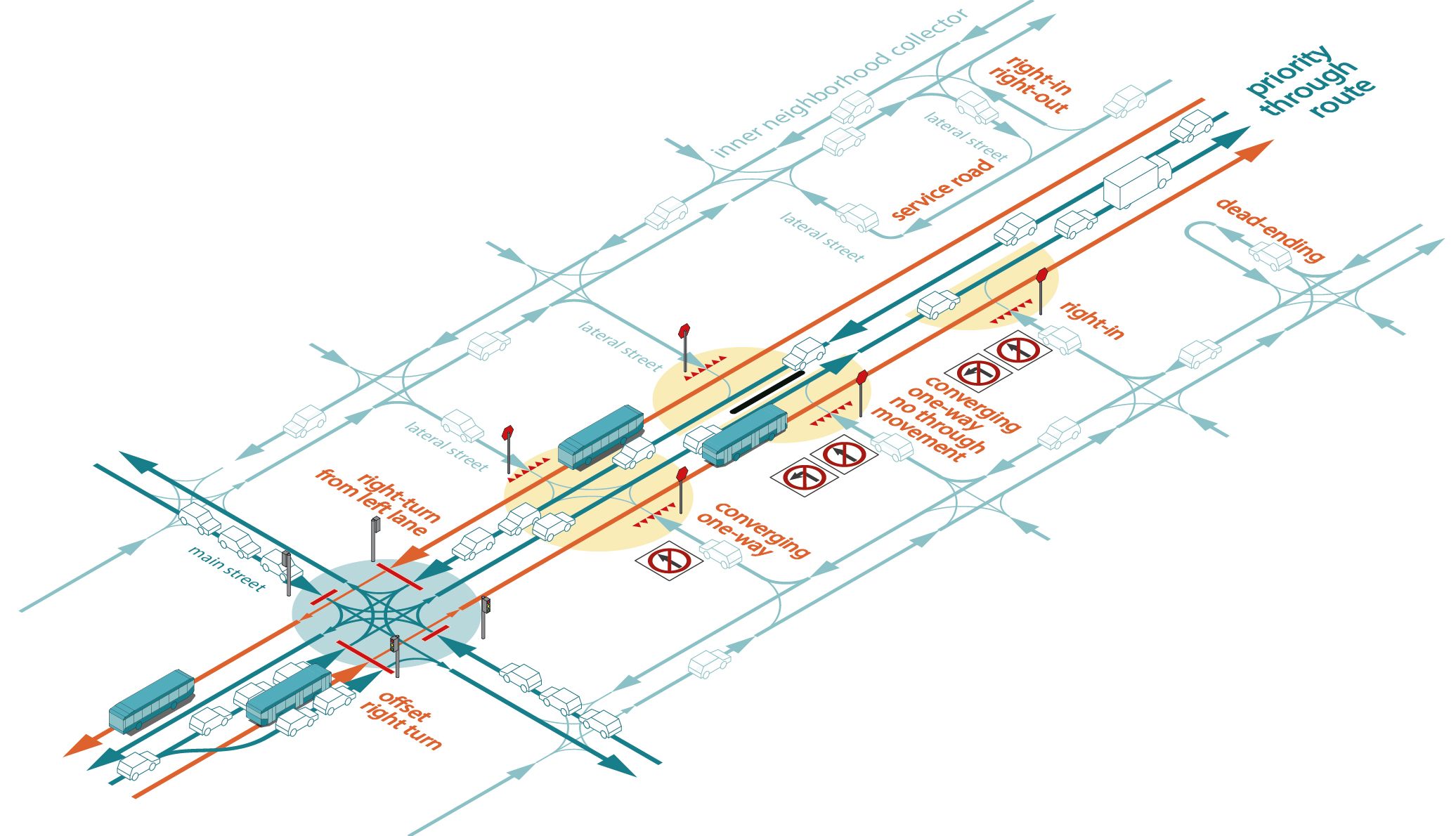
The identification of priority corridors for transit is characterized by a more hierarchical organization of the road network at the city and neighborhood scales from a functional point of view, and is reflected primarily in the management of intersections with lateral streets along these corridors. Establishing priority corridors for transit means systematically limiting through-traffic on lateral streets using tools such as right-in/right-out (L3), dead-ending (L4), or by organizing lateral streets as converging and diverging one-ways, while managing a majority of intersections with lateral-street-only stops or yields. This strategy requires acting not only on the corridor itself, but also to reshape the circulation patterns of the local streets in the broader area, to prevent their use by through traffic, for example, by organizing them in looping patterns and/or reducing traffic with modal filters, a strategy that reflects that of low-traffic neighborhoods.
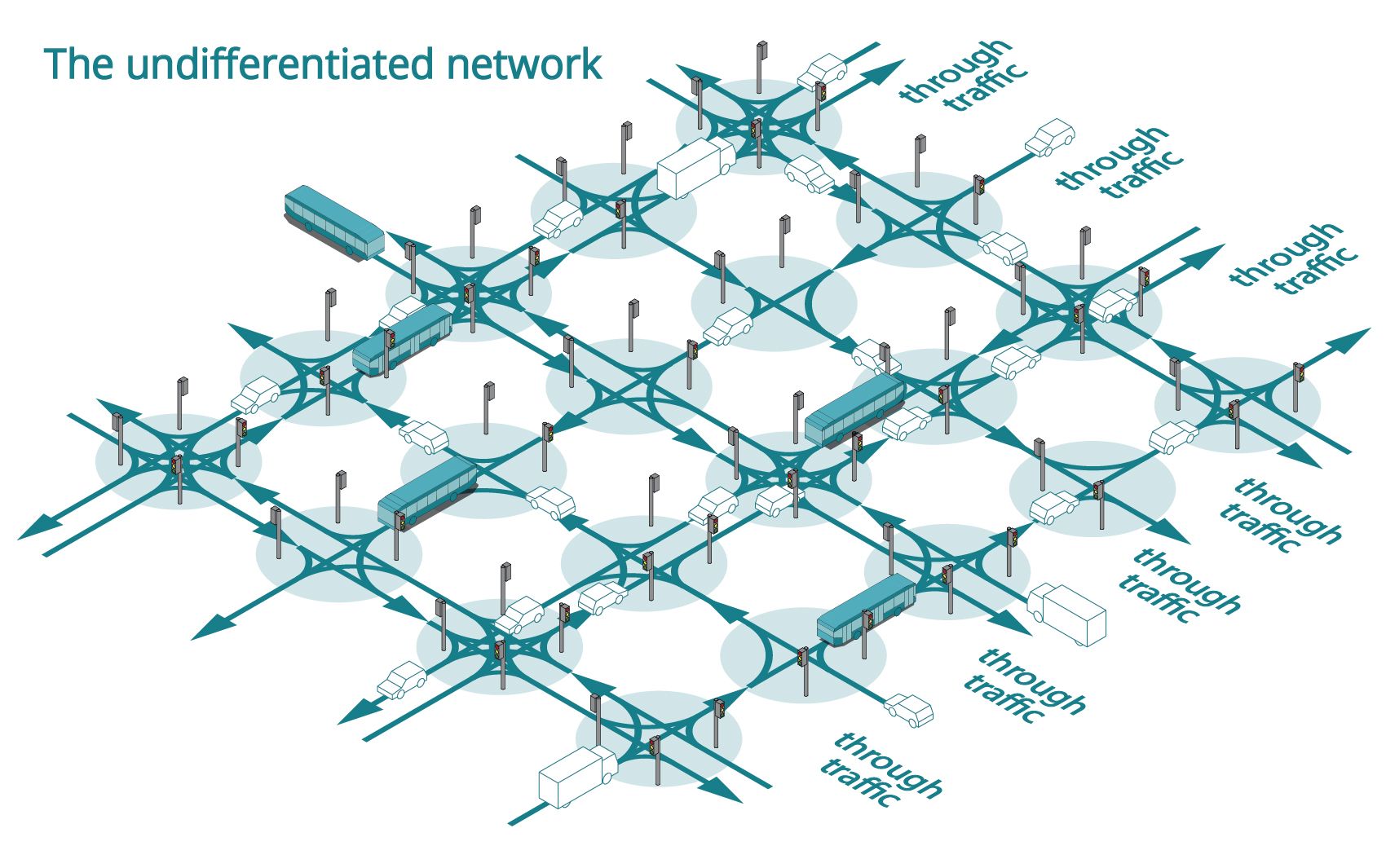
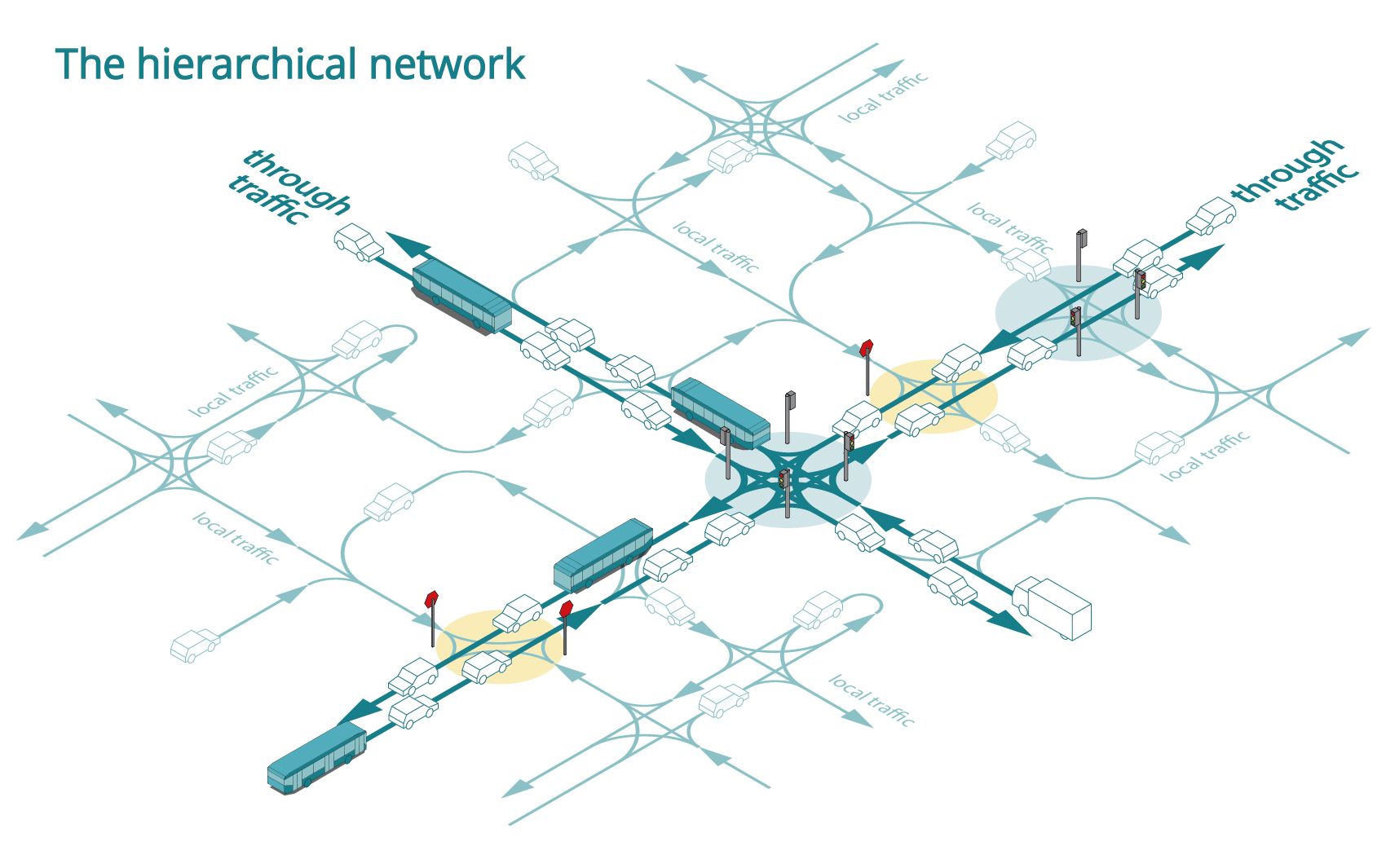
It is worth noting that this strategy of functionally ordering the road network within the pre-car parts of cities has been widely implemented to speed up general traffic, not just transit, notably starting in the 1960s in continental Europe, following recommendations from influential reports such as the seminal “Traffic in Towns” by UK planner Colin Buchanan. In countries that follow the 1968 Vienna Convention on Road Signs and Signals, this has led to the adoption of “priority roads” marked by specific road signs, where vehicles don’t have to stop at every intersection unless it’s a signalized one. Since the 1970s, this principle has been reinterpreted in many jurisdictions to define priority corridors for transit.
How to implement priority corridors for transit
The tools used to deploy a transit priority corridor vary depending on the corridor's priority treatment. In corridors where transit predominantly runs in mixed traffic, converging and diverging one-way lateral streets, and dead-ends (L4) can be leveraged to prioritize the main corridor while managing lateral streets primarily with lateral-street-only stops or yields. To further reduce through-traffic across the corridor, inner local streets can be organized to discourage it with looping circulation patterns and modal filters. At major intersections with other through corridors, indirect left turns can be used to eliminate delays and simplify intersection management.
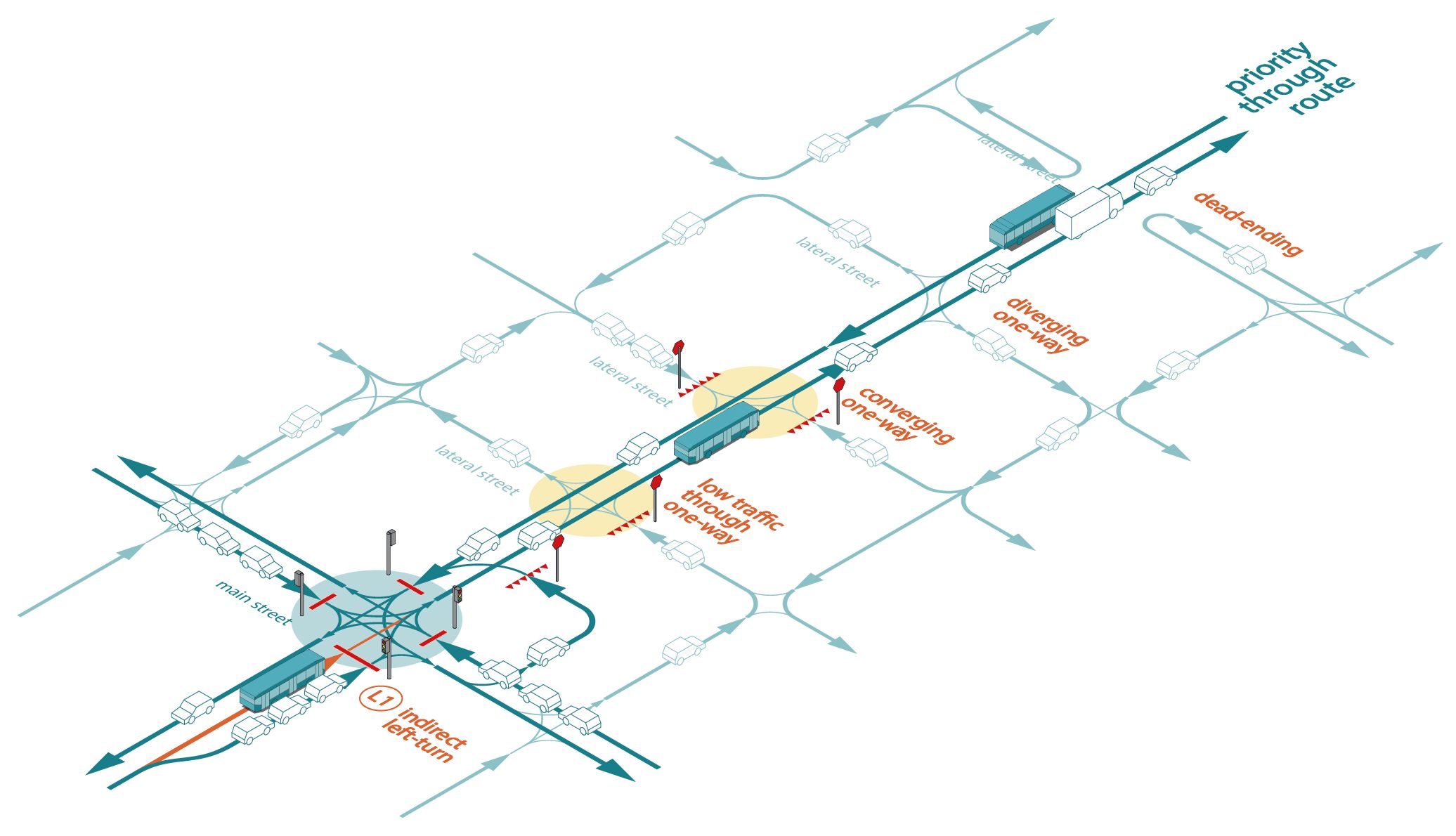
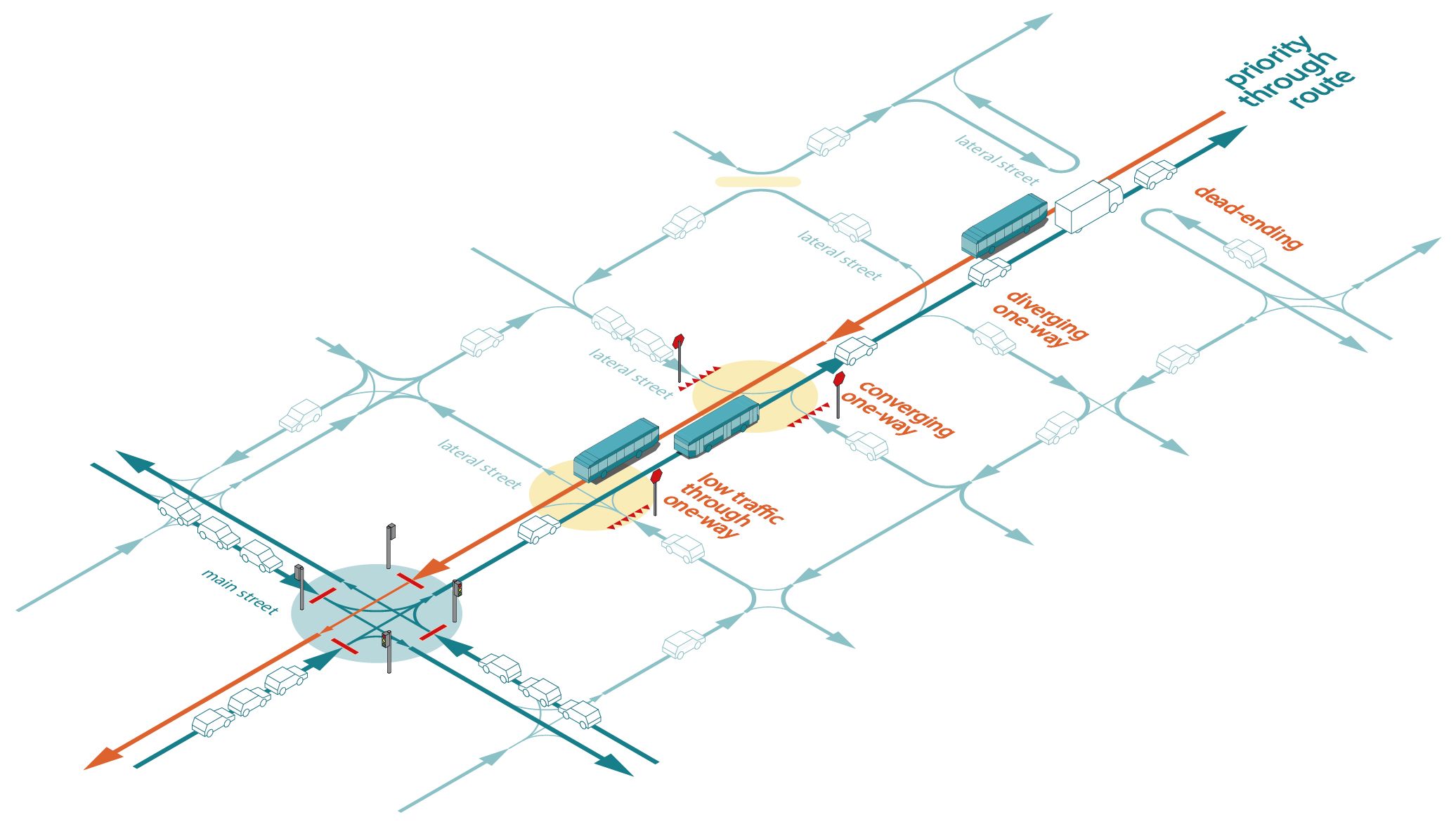
For corridors with Contraflow Transit Lanes (F1), the priority treatment relies on a similar strategy. The contraflow setup further simplifies lateral street management by systematically reducing conflicts. This has been widely used since the 1970s, making it a key strategy in cities like Bologna and Lyon.
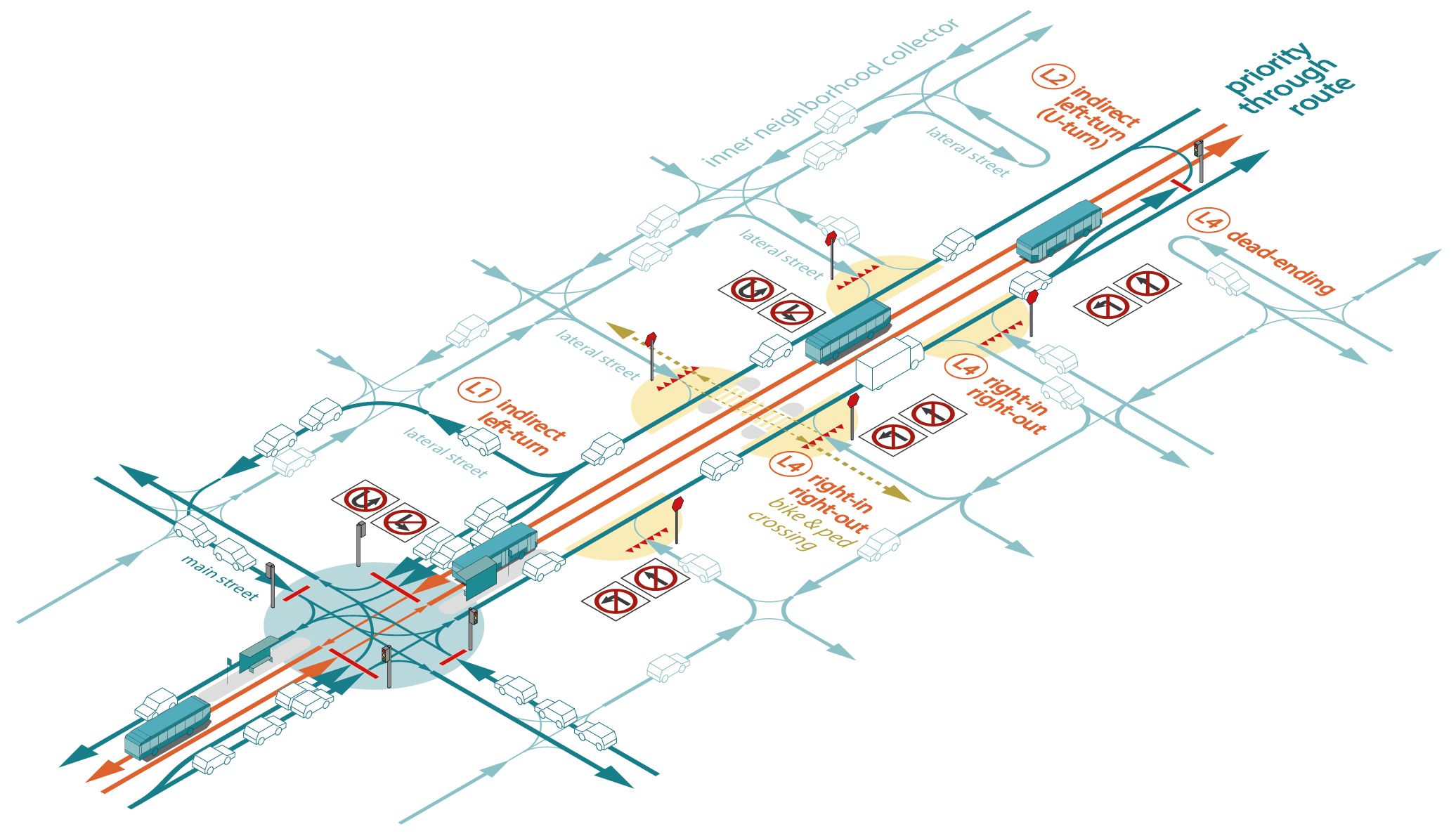
For corridors with center-running transit lanes (B1), treating intersections with lateral streets with right-in/right-out (L3) setups is the most effective way to eliminate conflicting vehicular movements across the dedicated transit corridor. Pedestrian and bike permeability can be preserved at some or most intersections by managing them with marked crossings or signals, preferably with refuge islands. Indirect left-turns (L1 & L2) can be deployed to simplify the management of major intersections and reduce their footprint. Access to lateral streets from the opposite direction can be ensured with strategically located U-turns or via alternative routes, such as in-neighborhood collector streets.
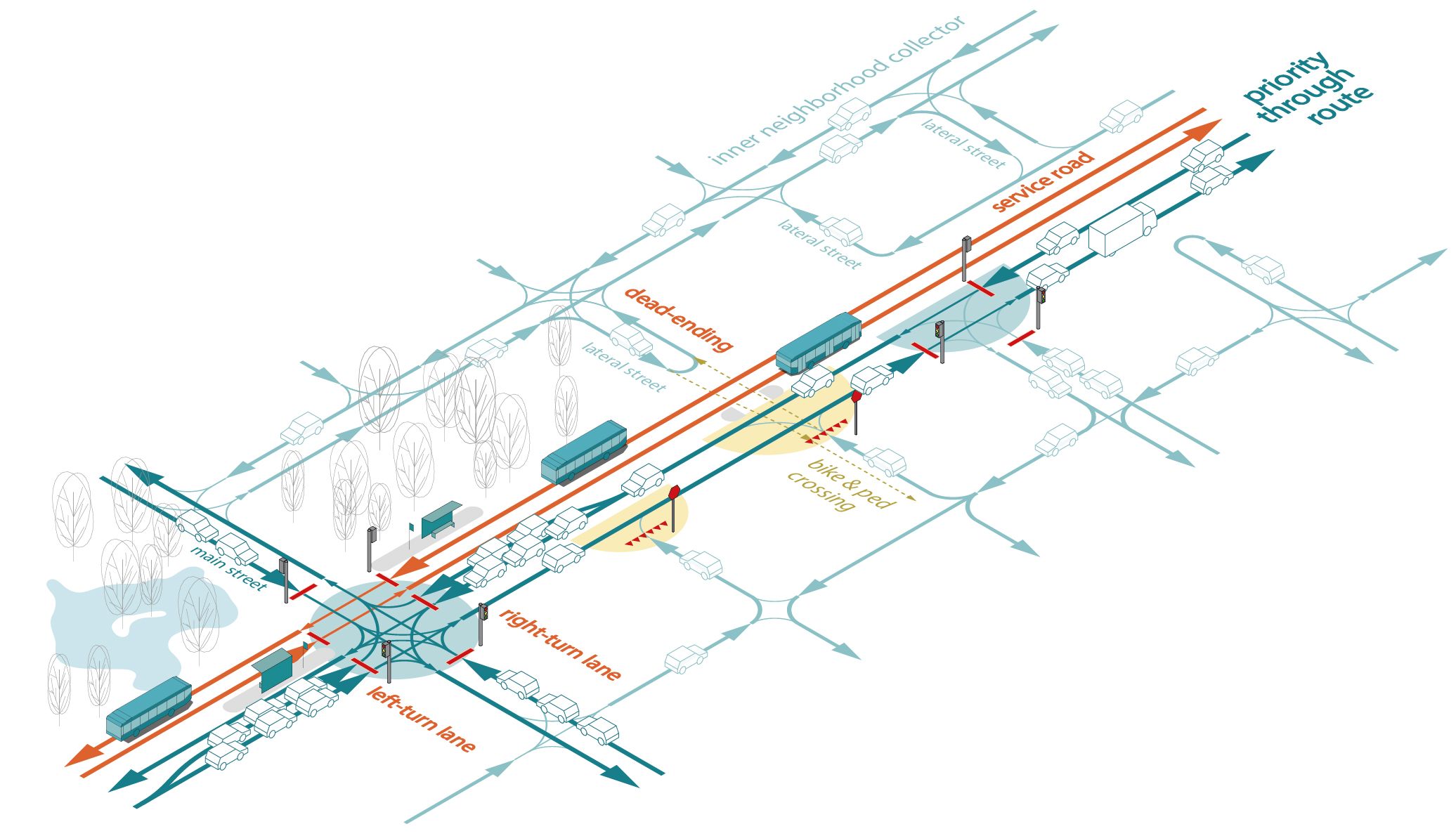
For corridors with Edge-Running Transit Lanes (C1), the most relevant action to implement a transit-priority corridor is to address conflicts with the lateral streets on the side of the corridor where the transit lanes are located, with unilateral dead-ending (L4) or using a service road or lane to collect and distribute traffic from lateral streets. Edge-running treatments are also more suitable to create a priority through route when one side of the main corridor already has fewer intersections, for example, on streets bordering rivers, railway lines, or large compounds such as parks, campuses and cemeteries, or when intersections are already further spaced, such as in suburban contexts, where it can be preferable to center-running as it simplifies intersection management, notably for pedestrians, and can more easily include the most aggressive form of signal priority, i.e. signal preemption.
For corridors with offset (D1) and curb-adjacent (E1) Transit Lanes, moving most lateral streets to converging one-way configurations eliminates the two conflicts that might require a signalized intersection (left turns into lateral streets and through movements between lateral streets) as well as right turns from the priority corridor to the lateral street, which are the intersection conflicts that cause delays to transit vehicles in these lanes. Further prohibiting left turns from the lateral street into the priority corridor will ensure that the lateral street can be managed with lateral-street-only stops. As in other configurations, inner-neighborhood collectors, service roads, and other circulation arrangements at the wider-area level help to relocate local traffic access away from the priority corridor, compensating for the loss of direct accessibility.